How to get to Erg Chigaga
The two gateway towns, the 4×4 and camel routes, and what self-driving really involves.
The practical side of a first trip to Erg Chigaga, from choosing a gateway town and deciding how many nights to spend in the dunes to cash, phone signal and what goes in your bag.
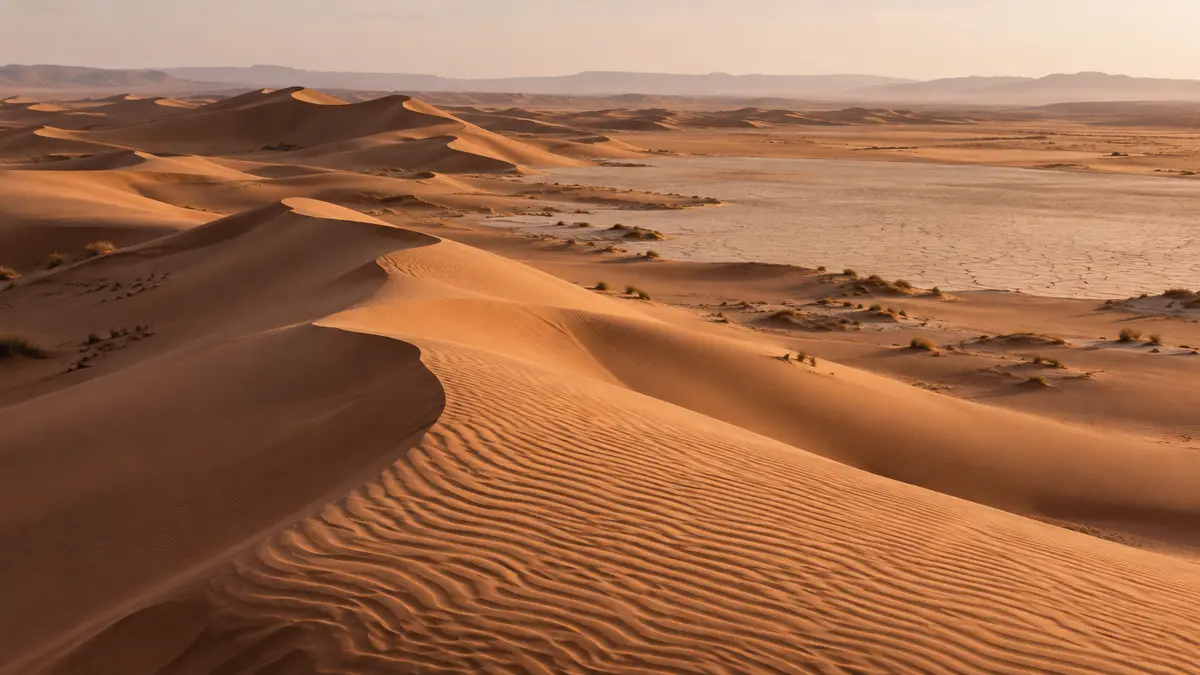
Erg Chigaga is a large field of sand dunes in the far south of Morocco, close to the Algerian border. An erg is a sand sea: the shifting dune landscape most people picture when they think of the Sahara. Unlike Erg Chebbi near Merzouga, Erg Chigaga has no tarmac road leading to it and no village at its edge. You arrive by 4×4 across open desert, or on foot with a camel caravan.
You will see the name spelled several ways, including Erg Chigaga, Erg Chegaga and Chgaga. They all refer to the same dunes. We use Chigaga in English; French-language maps and guidebooks usually write Chegaga.
Two towns serve as gateways:
Our Erg Chigaga destination page describes the dunes themselves in more detail.
The biggest factor is how far you are travelling to reach a gateway town. The dunes are a long way beyond the end of the tarmac, so the off-road crossing takes up a good part of a day in each direction.
Starting from Marrakech, allow more time again. Our page on trips from Marrakech explains why we normally suggest at least three days.
Erg Chigaga is reachable only off-road. The paved roads end at Foum Zguid and M’Hamid, and beyond them you need a 4×4 with a driver who knows the tracks, or camels and a guide. Self-driving is only for experienced off-road drivers with proper equipment, and we advise against it for a first visit. The guide to getting to Erg Chigaga covers every option in detail.
Morocco’s currency is the dirham, which is generally obtained inside the country from cash machines and exchange offices in cities and larger towns. Once you leave the gateway towns there are no cash machines, and you should not expect to pay by card at a camp.
Do not plan on staying connected. Mobile coverage fades as you leave the tarmac and is patchy or absent across much of the route and in the dunes. You may pick up a signal from the top of a ridge, or you may not. Charging at camp is not guaranteed either.
Far from towns and their lights, Erg Chigaga has very dark skies on a clear night, and the Milky Way is often visible to the naked eye. A bright moon washes out the fainter stars, so if stargazing matters to you, check the moon phase before choosing dates. Night photography needs a tripod, a head torch with a red-light mode if you have one, and warm clothing: the temperature drops quickly after sunset.
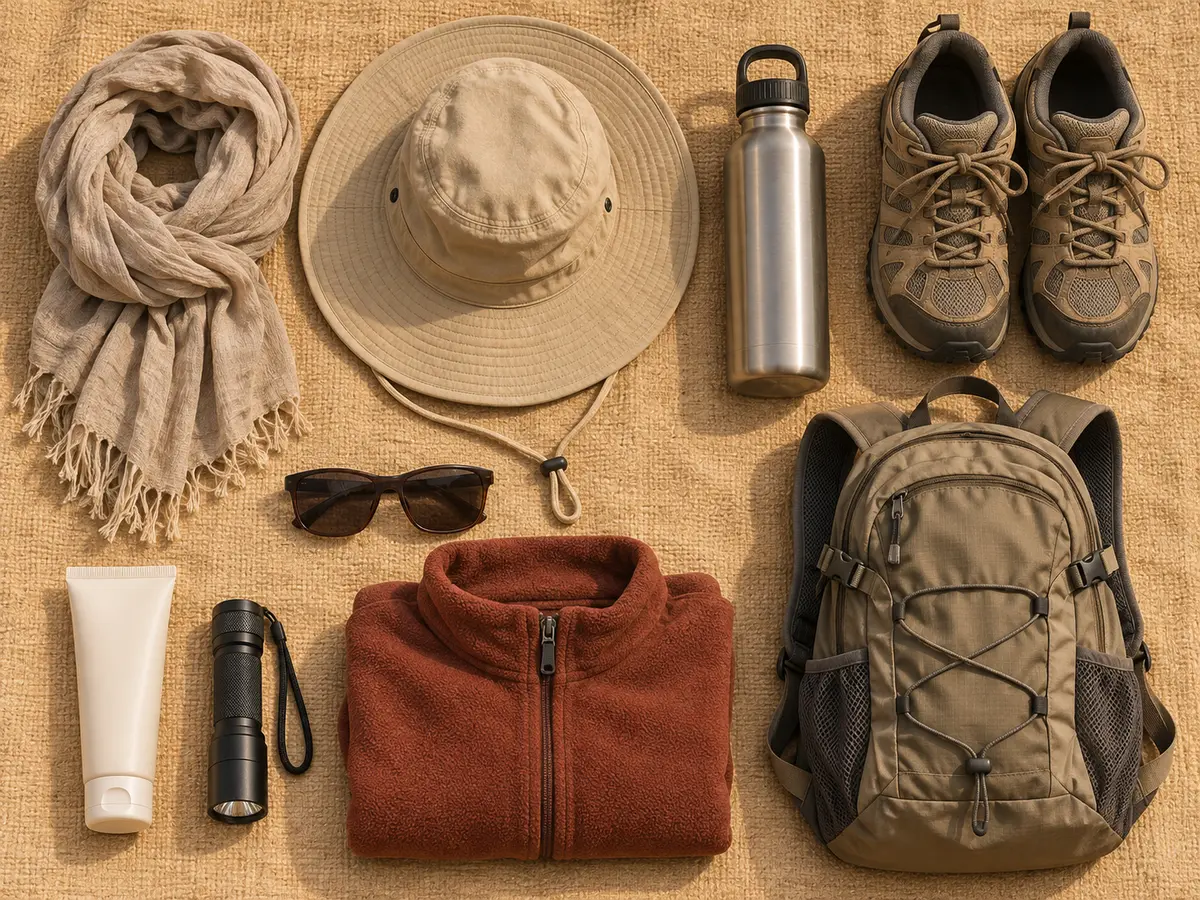
Pack light. Space in the vehicle is shared, and on a trek your luggage travels on a camel.
The weather guide explains how this list changes through the year.
For most travellers the main risks are environmental: heat, sun, dehydration and cold at night. Sensible clothing, plenty of water and a pace that suits the group deal with most of them. The more serious dangers face people who head out alone without the experience to navigate, or who get a vehicle stuck far from help.
The dunes lie close to the Algerian border, which is closed. Stay on the routes your driver or guide uses and do not go exploring towards it. Keep your passport with you, as you may pass checkpoints on the roads in the south.
Before you travel, read your own government’s current travel advice for Morocco and take out travel insurance that covers the activities you plan.
The desert and the communities around it are not a backdrop, and a few habits make a real difference.
The two gateway towns, the 4×4 and camel routes, and what self-driving really involves.
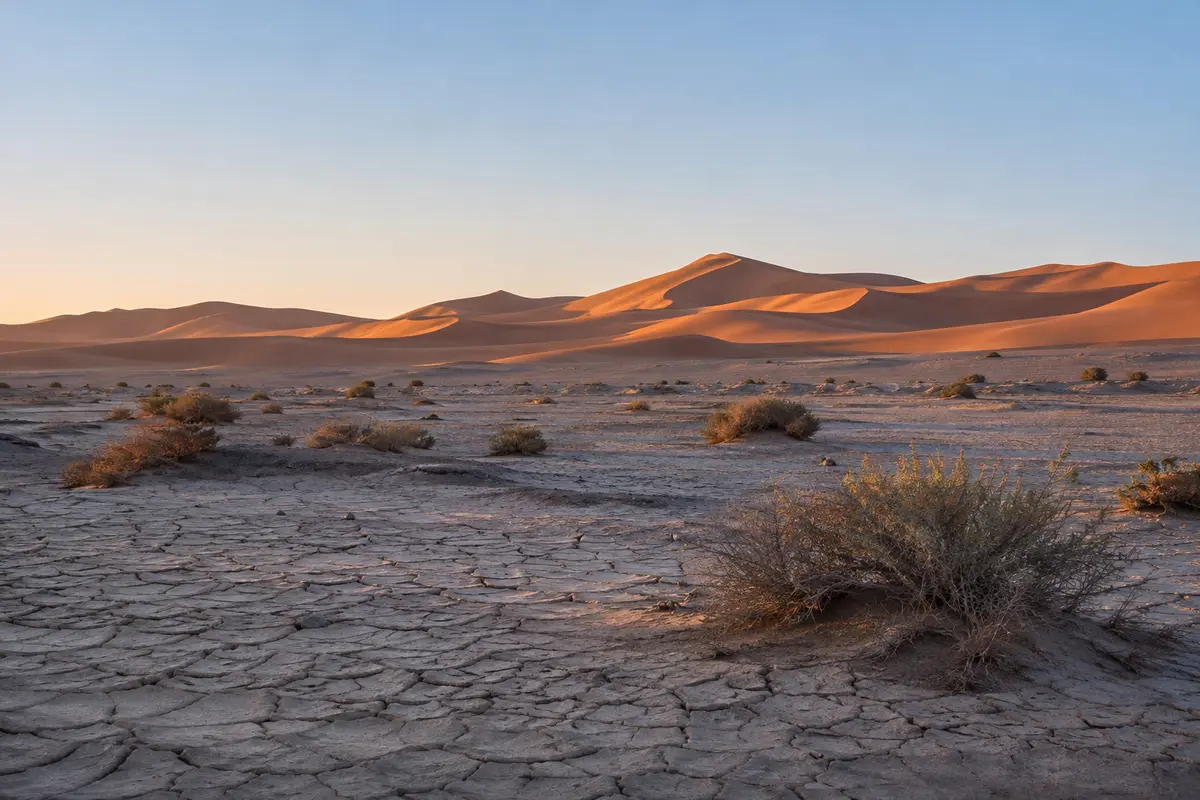
Autumn, winter, spring and summer in the dunes, and what each season means for your trip and your bag.
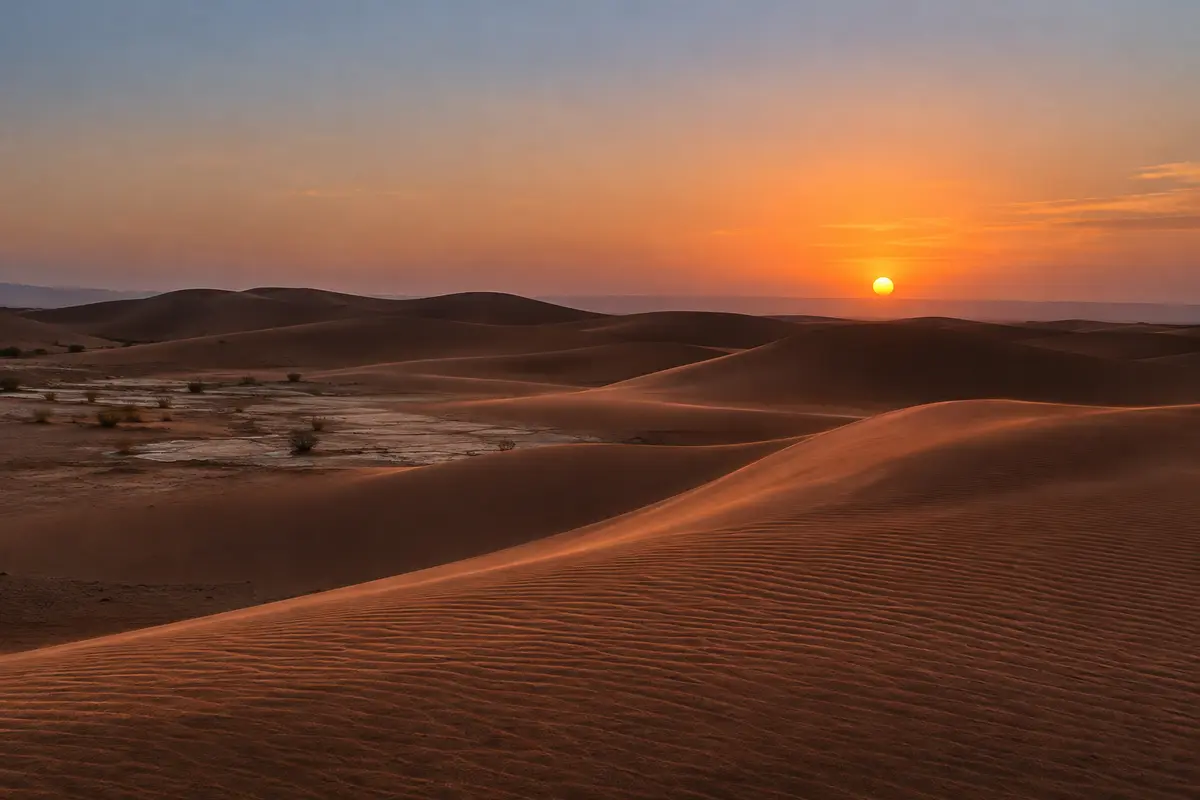
One night at a desert camp, with Lac Iriki on the way in and sunset on the dunes.
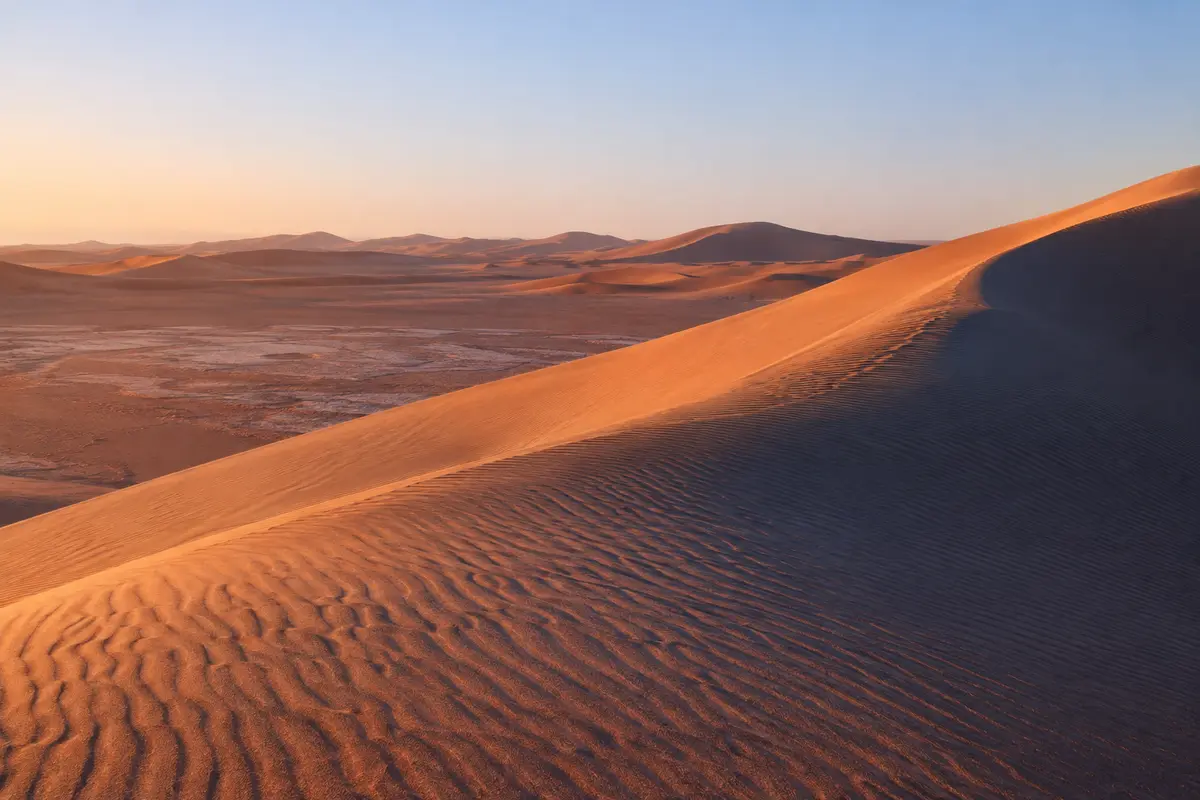
Two nights at a desert camp with a whole day in the dunes for walks, sunrise and slow time in the sand.
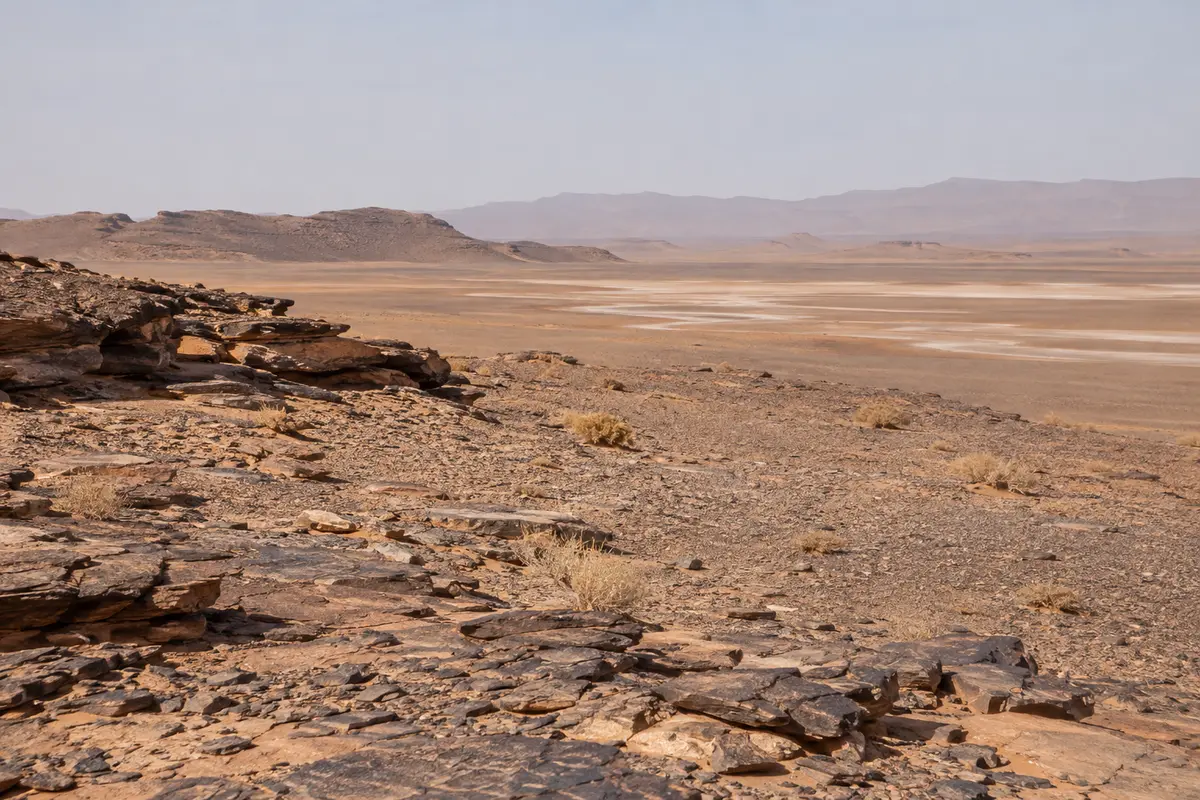
The western approach on tarmac to Foum Zguid, then off-road across Lac Iriki to the dunes.
Send your dates and group size. We reply with a written itinerary and price — no payment needed to ask.