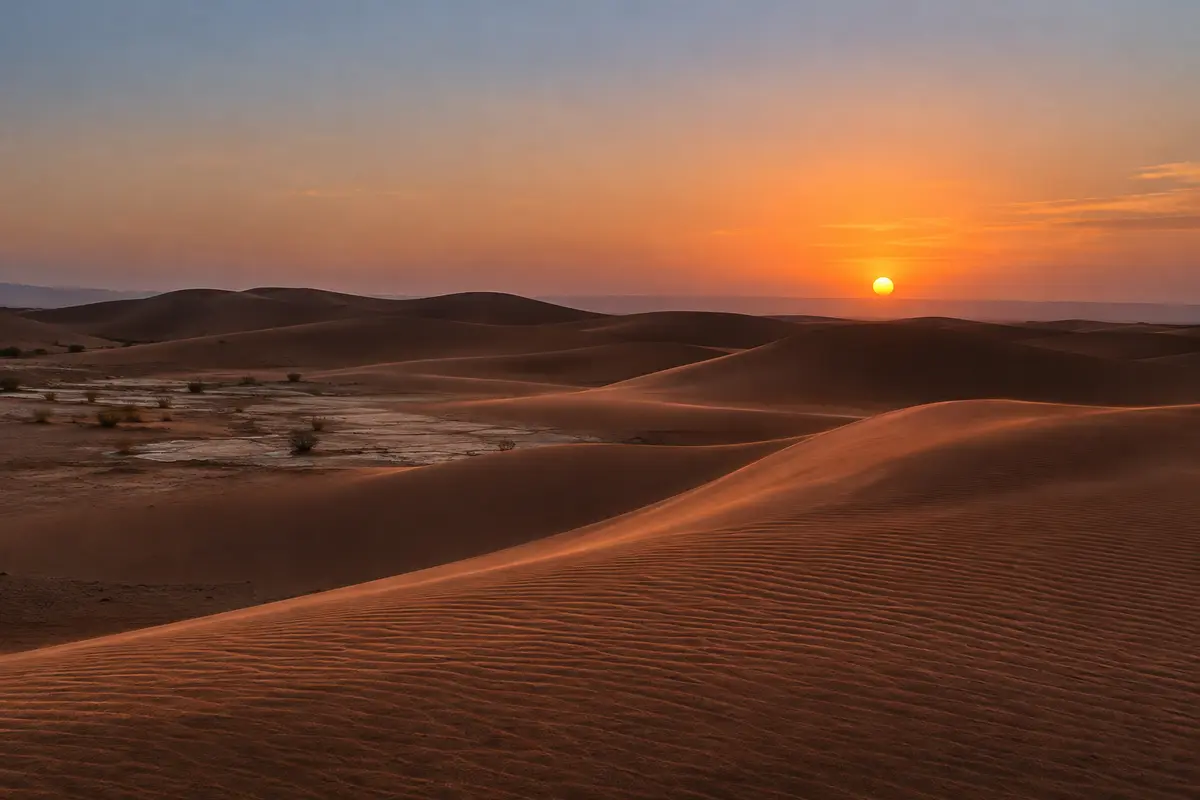
Erg Chigaga 2 days from Foum Zguid
One night at a desert camp, with Lac Iriki on the way in and sunset on the dunes.
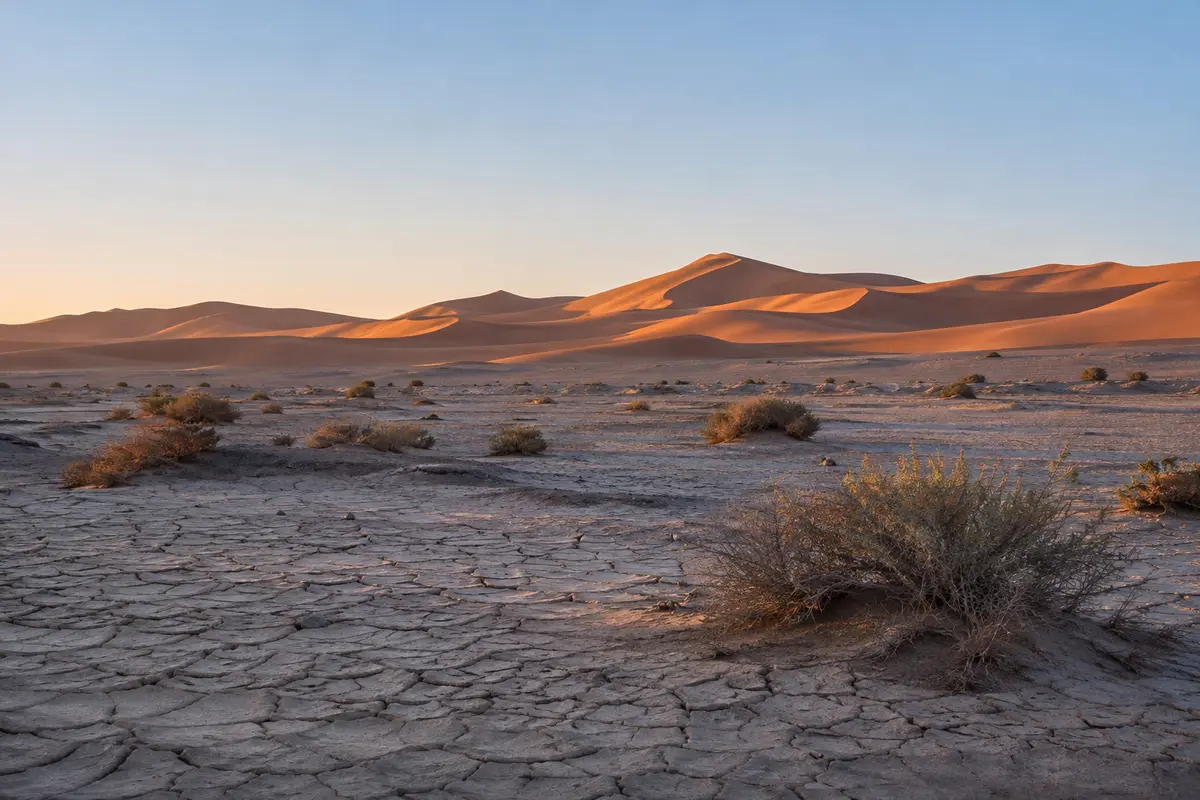
The desert has seasons, and they shape everything from how a trek feels to how many layers you need at camp. Here is what to expect at Erg Chigaga through the year, described in plain terms.
A month-by-month table of temperatures from a cited climate source will be added to this guide. Until then we describe the seasons in general terms and do not publish monthly figures, because reliable records for the dunes themselves are scarce and numbers for remote areas are easily misquoted.
The most important thing to understand about desert weather is the swing between day and night. Dry air and clear skies let the heat of the day escape quickly once the sun sets. An afternoon that feels warm in a T-shirt can be followed by a night when you want a jumper, a hat and a warm sleeping layer.
That is why we suggest warm layers in almost every season. Sunrise, the time many people most want to be out on the dunes, is usually the coldest part of the day.
As the summer heat fades, the days turn warm and pleasant and the nights cool down, growing colder as November goes on. September often still feels like summer. Autumn is a popular time for both 4×4 trips and treks, so camps tend to fill earlier.
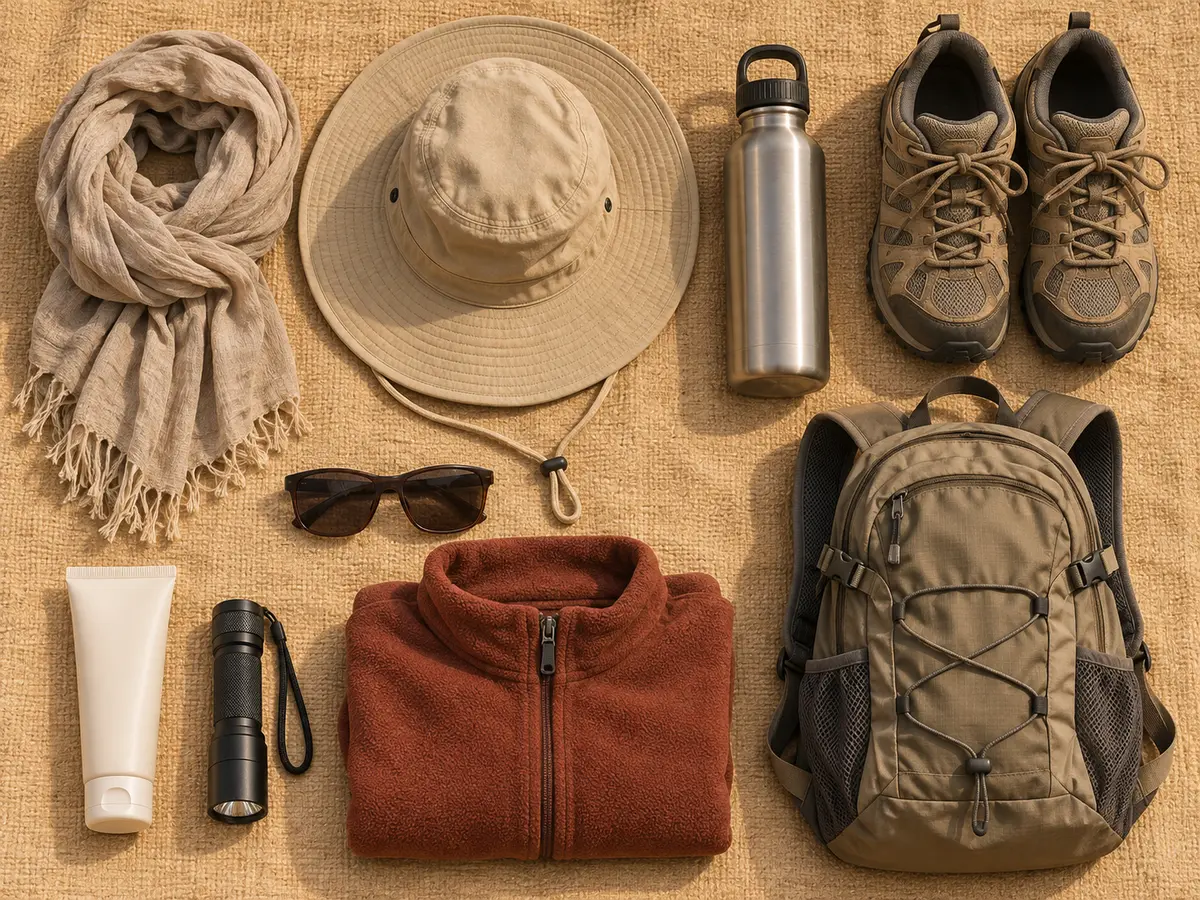
Pack: light clothing for the day, a warm layer for the evening, and sun protection.
Winter days are often mild and sunny, which makes them good for walking. Nights are cold and can drop close to freezing, especially in the open desert. Days are short, so there is less daylight for the journey and sunset comes early. The Christmas and New Year period is among the busiest of the year.
Pack: a proper warm jacket, a hat and gloves for the evening and early morning, and warm sleepwear. Ask us what bedding is provided at the camp you choose.
Spring brings warmer days and, often, more wind. Strong wind can lift sand into the air, reduce visibility and make driving slower and camp evenings less comfortable. Sandstorms often pass within hours but can last longer, and they are impossible to predict far in advance. By late spring the days are getting hot. Easter holidays are busy.
Pack: sunglasses that wrap around, a scarf or buff to cover your face, and lip balm. Contact-lens wearers may prefer glasses on windy days.
Summer is very hot by day, and the heat can be dangerous for people who are not used to it. Activities are kept to the early morning and the evening, with a long rest in the shade in the middle of the day. Nights are warm. Multi-day walking treks are generally not advisable in the hottest months.
Some travellers still choose summer, particularly when it is the only time they can travel. If that is you, tell us and we will be honest about whether the trip you have in mind makes sense, and how to plan it around the heat.
Pack: loose, light, long-sleeved clothing, a wide-brimmed hat, high-factor sunscreen and a refillable water bottle. Drink regularly and learn the signs of heat exhaustion.
Rain is rare in this part of Morocco, but when it comes it can be heavy. Dry river beds can fill quickly, and parts of the Lac Iriki lake bed can become soft or muddy. Drivers may change route, delay a crossing or wait for conditions to improve. These decisions are made on the day, with safety first.
Ramadan follows the Islamic lunar calendar, so it moves earlier each year by around eleven days. In towns, café and shop hours may change during the day. Desert trips generally continue, but if your dates fall during Ramadan, ask us how it may affect your plans.
Camps fill fastest during European school holidays, at Christmas and New Year, and around Easter, as well as during Moroccan public holidays. If your dates fall in one of these periods, ask for a quote early.
Forecasts for the dunes themselves are hard to find. Forecasts for Foum Zguid, M’Hamid or Zagora give a rough idea, but wind and temperature in the open desert can differ noticeably from conditions in town. We talk through the forecast with you in the days before your trip, and your driver or guide makes the final call on the day.
| Season | 4×4 trips | Camel treks | Main thing to plan for |
|---|---|---|---|
| Autumn | Good | Good | Booking early |
| Winter | Good | Good on mild days | Cold nights |
| Spring | Good, wind permitting | Good, wind permitting | Wind and sand |
| Summer | Possible, early and late | Generally not advisable | Heat |
For trip ideas by length, see the 2-day trip, the 3-day trip or our treks. For the rest of your planning, the Erg Chigaga travel guide covers cash, connectivity and packing in more detail.
One night at a desert camp, with Lac Iriki on the way in and sunset on the dunes.
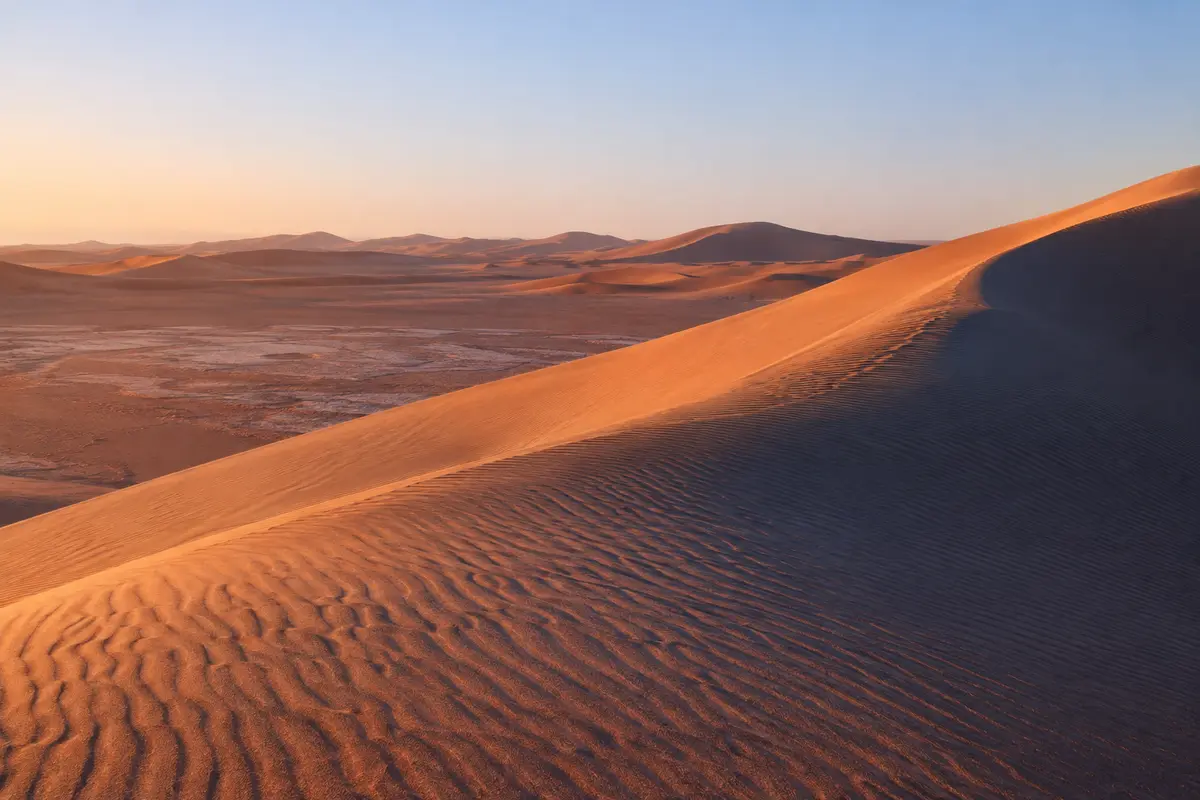
Two nights at a desert camp with a whole day in the dunes for walks, sunrise and slow time in the sand.
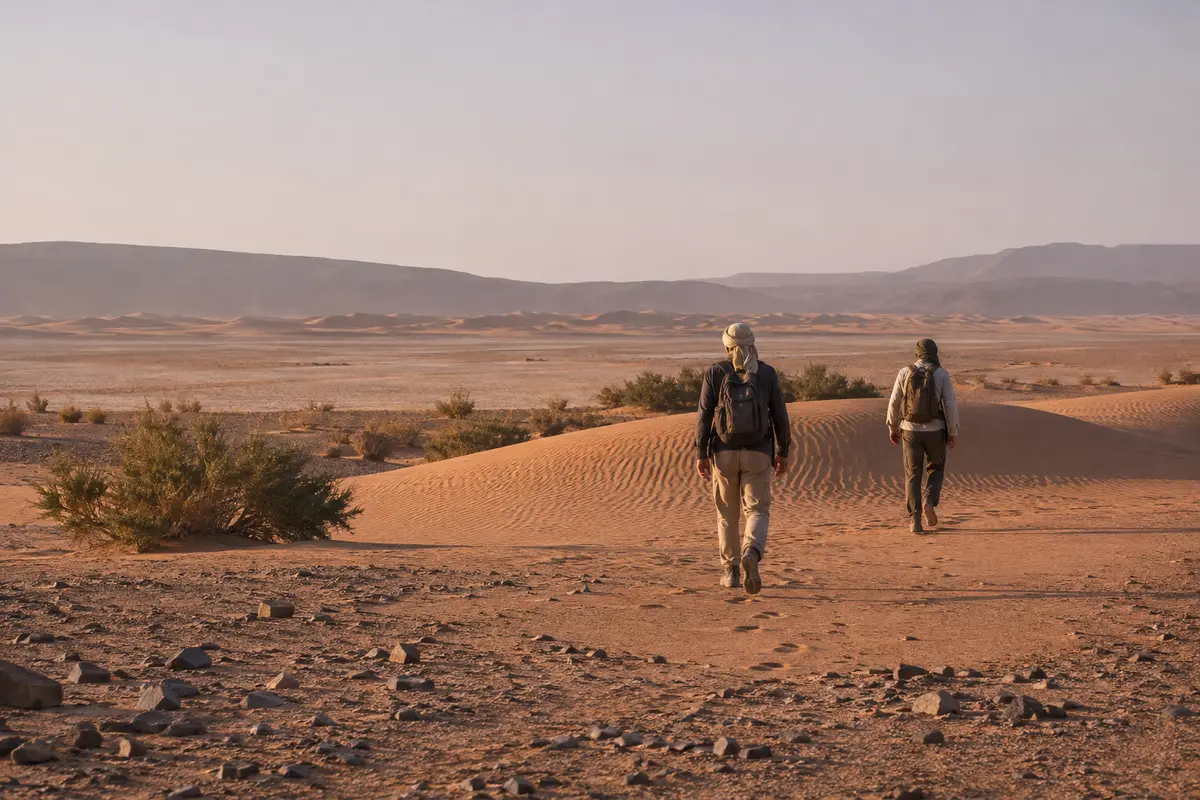
Desert walking at Erg Chigaga explained, from dune walks and short camel rides to camel-supported treks of 3 or 4 days, with longer routes on request.
Simple bivouacs, standard camps and luxury set-ups compared, with the questions to ask before you book.
Where the dunes are, how long to stay, and the practical details worth sorting before you go.
Send your dates and group size. We reply with a written itinerary and price — no payment needed to ask.