Illustration
Erg Chigaga day trip
A long return day by 4×4 from Foum Zguid, crossing Lac Iriki to the dunes, with no night at camp.
Private trip 4×4 Price on request
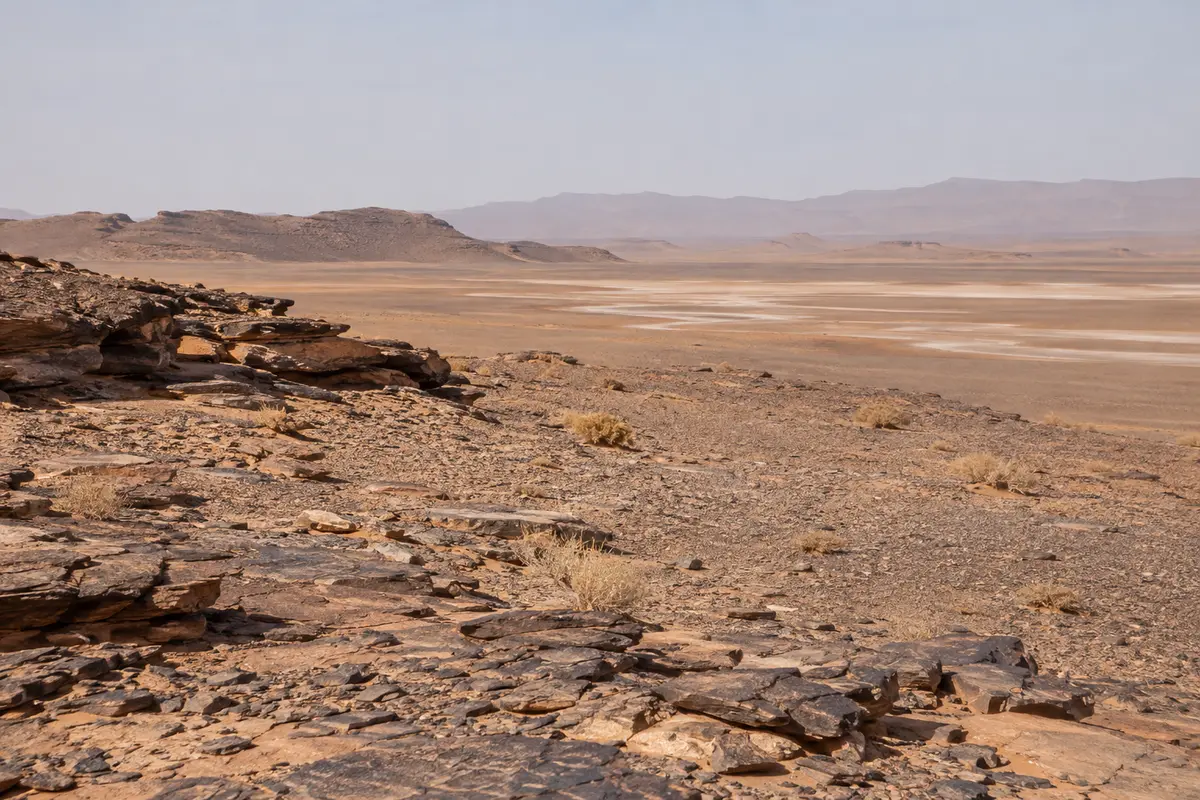
Foum Zguid is the western gateway to Erg Chigaga. You arrive on tarmac, meet your driver and leave the road behind for an off-road crossing of stony desert and the dry bed of Lac Iriki, with the dunes rising slowly ahead.
Foum Zguid is a small town on the N12 road in Tata province, and you reach it entirely on tarmac. Most travellers come from Ouarzazate via Taznakht, often after crossing the High Atlas from Marrakech. Others arrive along the N12 from Zagora in the east or Tata in the west, or inland from Agadir.
Wherever you come from, the drive is long and passes through sparsely populated country. Many travellers find it easier to arrive the evening before and spend a night in or near town, so the desert crossing starts fresh. If you need transport to Foum Zguid, ask us and we will include a transfer in your quote. Our Foum Zguid guide covers fuel, cash and other practicalities.
The change is quick. Not long after leaving Foum Zguid, the paved road is behind you and the vehicle is on desert tracks. The first section is mostly stony ground and gravel plains, sometimes with dry riverbeds and low rocky ridges. It can be bumpy, and the pace is set by the terrain rather than the clock.
Further on, the ground opens out into the wide Iriki basin. Closer to Erg Chigaga, sand begins to appear in patches, then in drifts, and the final approach to camp runs over softer ground where driving skill matters most.
This is why we only travel this route by 4×4 with a driver who knows it well. There are no signposts, tracks branch and shift, and mobile signal is unreliable.
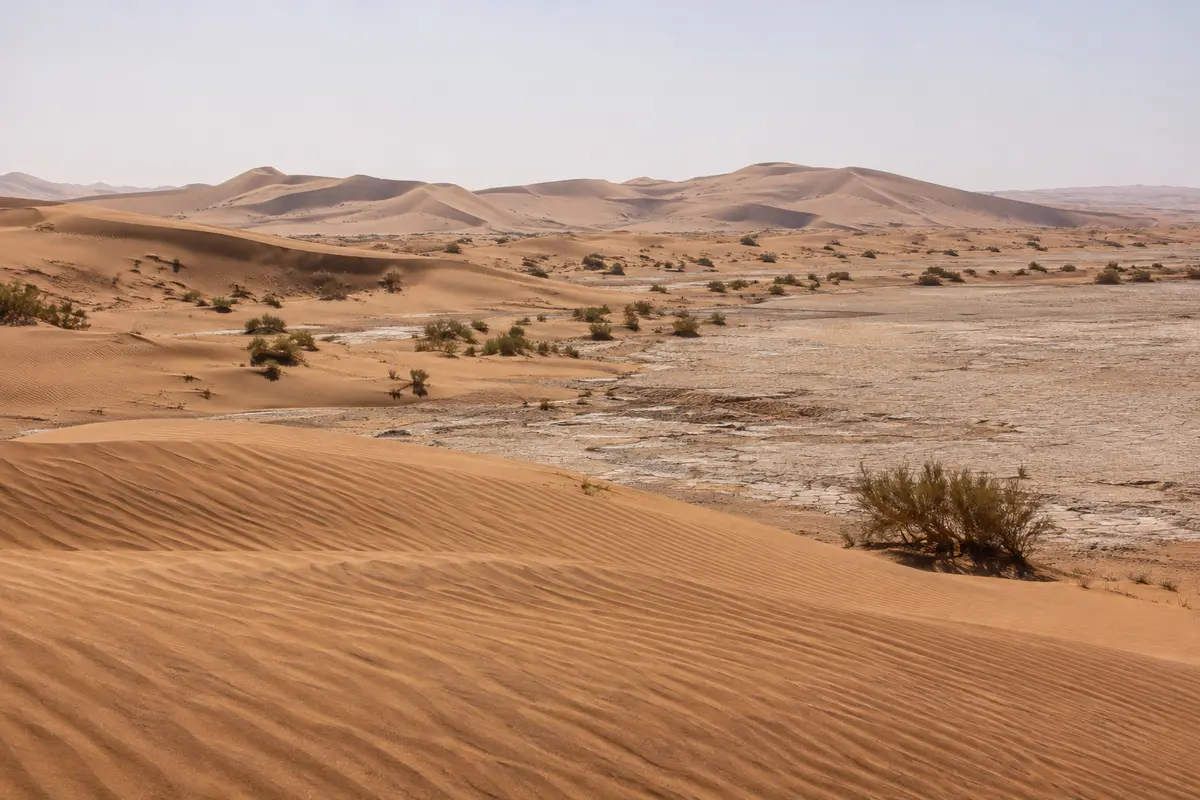
The highlight of the western approach is the crossing of Lac Iriki, a vast dry lake bed inside Iriki National Park. After the stony plains, the surface becomes hard, flat and pale, and the line of dunes appears on the horizon. It is a good place to stop, stretch your legs and take photographs.
On a return trip you usually cross Lac Iriki twice, on the way in and on the way back, often in different light.
Desert routes are not fixed lines. Your driver may adjust the route because of:
None of this is unusual, and it is part of travelling in a real desert. We confirm a realistic plan in your itinerary and adjust it on the day if conditions require.
The right length depends on how much time you have and how you feel about long off-road drives:
If you are coming from Marrakech the same day, we usually suggest at least three days in total, so the desert is not squeezed between two long drives. See Erg Chigaga from Marrakech.
A verified route map will be added to this page once the track has been recorded on the ground. We do not publish straight-line maps, because they make the journey look shorter and simpler than it is. The real route bends around terrain, varies with conditions and does not follow a single fixed line.
Foum Zguid is not always the best place to start. If your trip already follows the Drâa valley to Zagora, or you want a camel trek that begins at the edge of the sand, the eastern approach from M’Hamid may make more sense. Our page on Erg Chigaga from M’Hamid compares the two honestly.
The details make a big difference on a desert trip: where you will sleep the night before, where to leave a rental car, how much luggage to bring, and what time to expect to reach camp. Send us your dates, the number of travellers and where you are coming from, and we will reply with a written itinerary covering all of this, along with the price for your group. Contact us to start.
A long return day by 4×4 from Foum Zguid, crossing Lac Iriki to the dunes, with no night at camp.
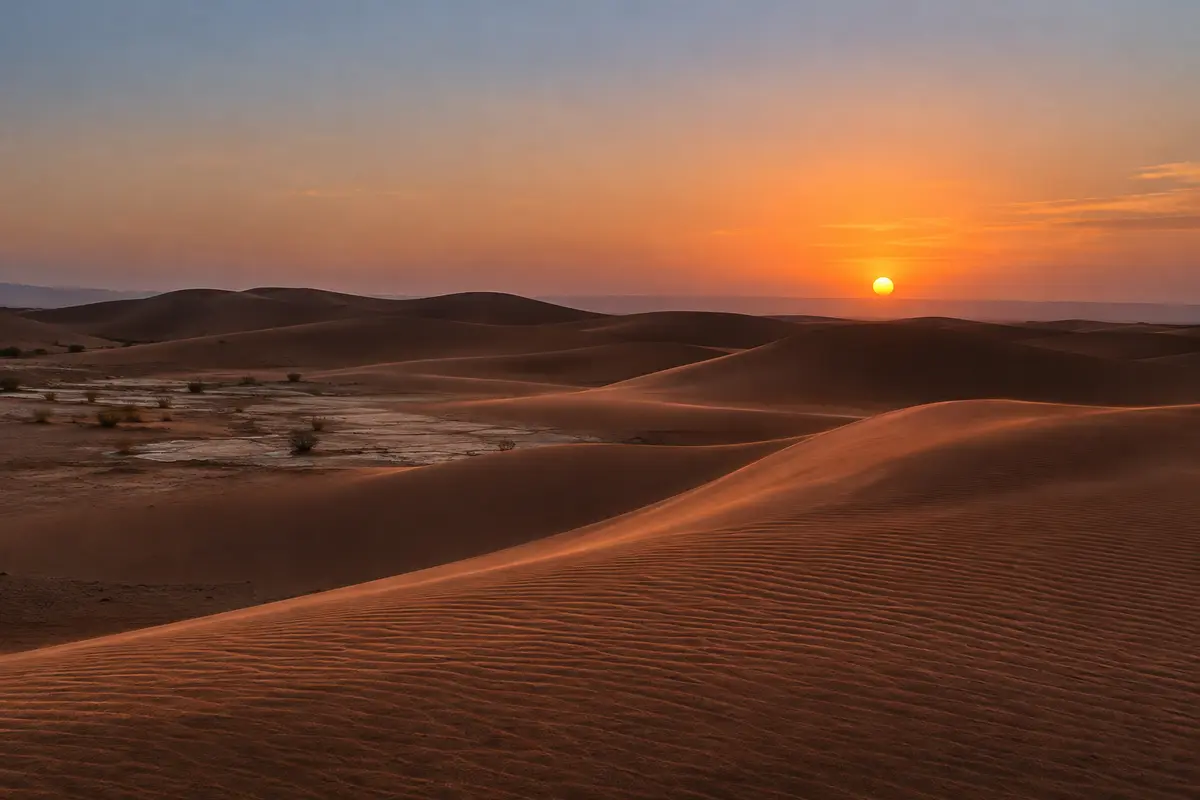
One night at a desert camp, with Lac Iriki on the way in and sunset on the dunes.
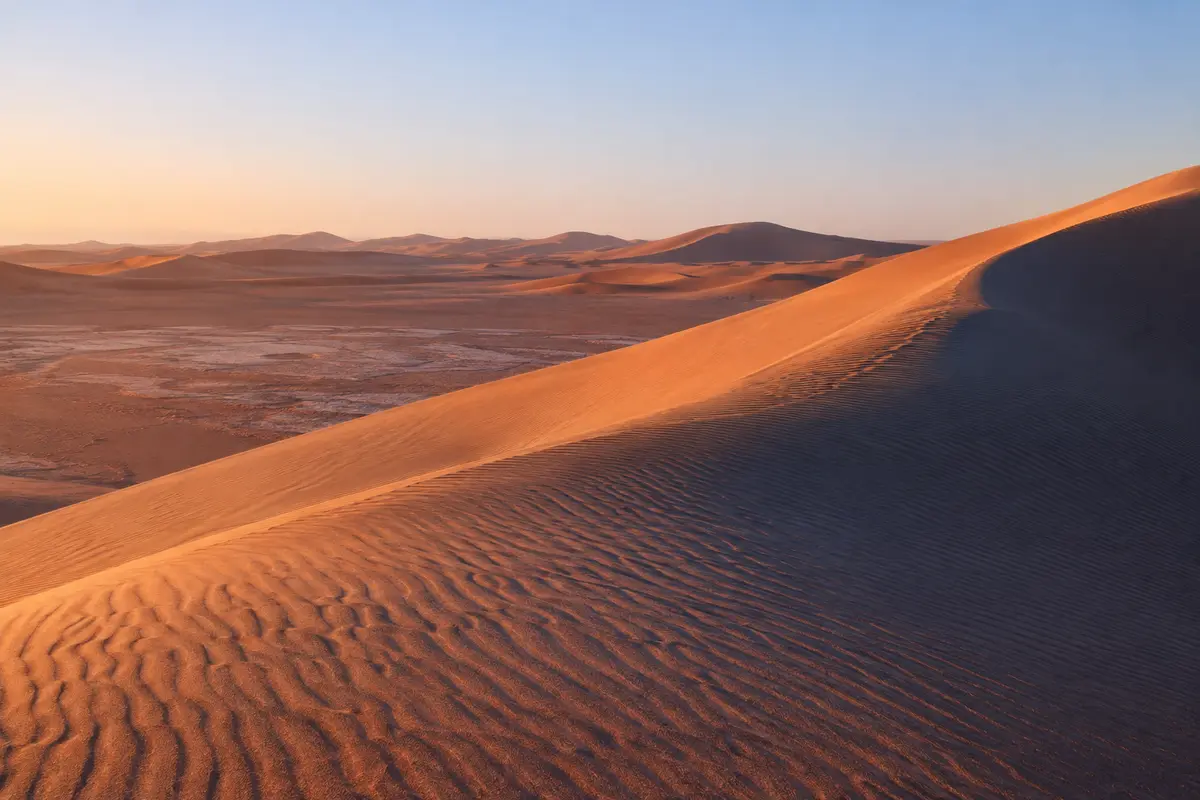
Two nights at a desert camp with a whole day in the dunes for walks, sunrise and slow time in the sand.
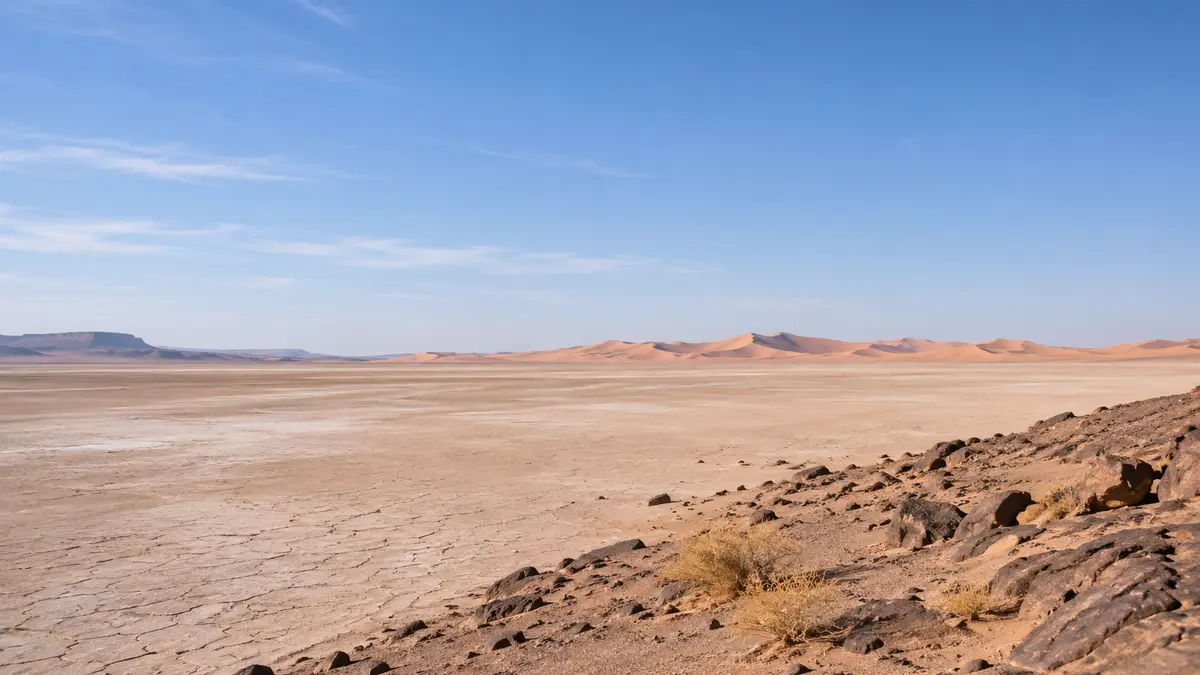
A day by 4×4 into the Iriki basin from Foum Zguid, with time on the dry lake bed. No dunes and no overnight.
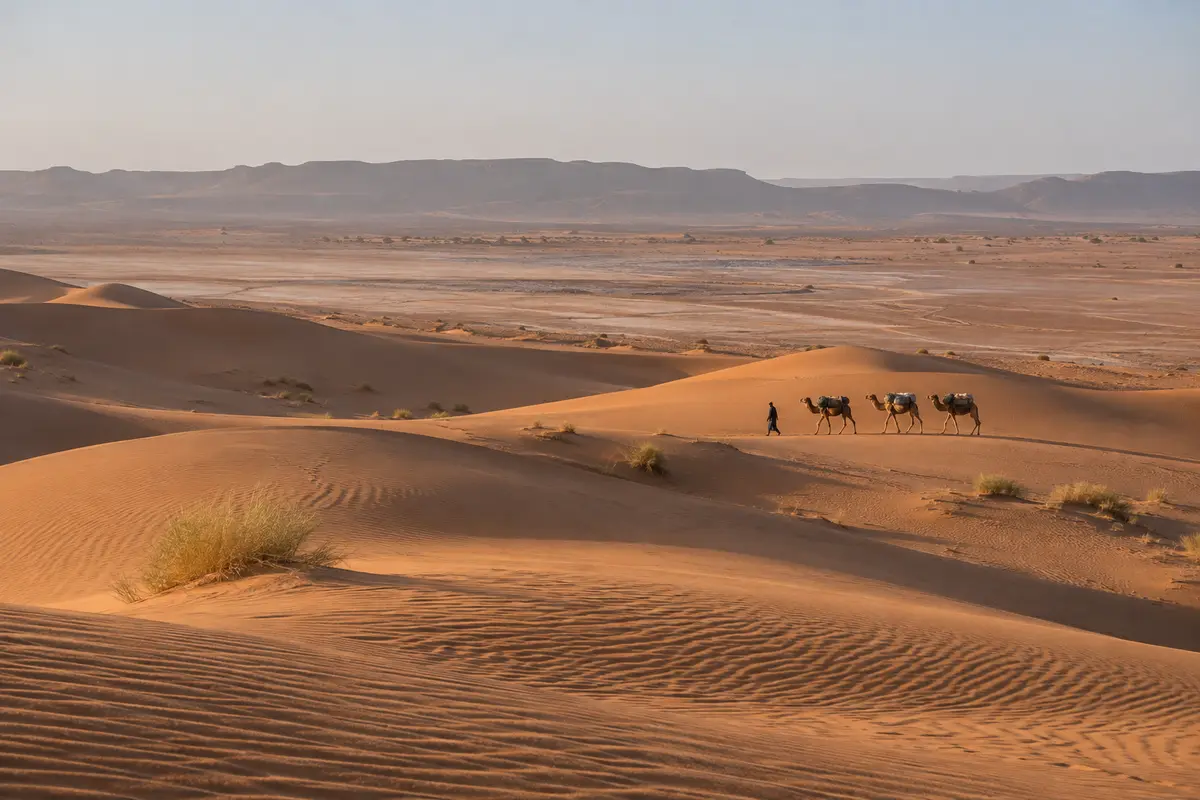
Walk towards the dunes for three days with a small camel caravan, sleeping two nights at simple mobile bivouacs.
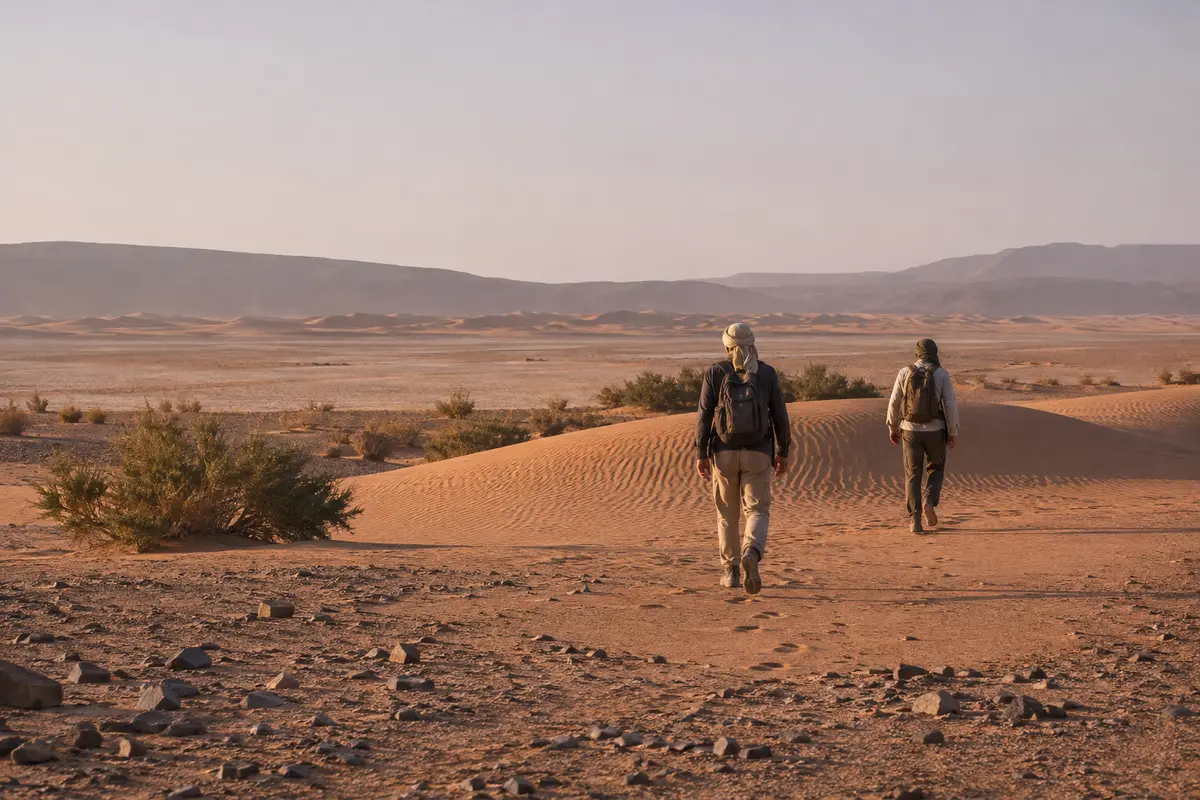
Four days on foot with a camel caravan and three nights at mobile bivouacs, for walkers who want a deeper desert route.
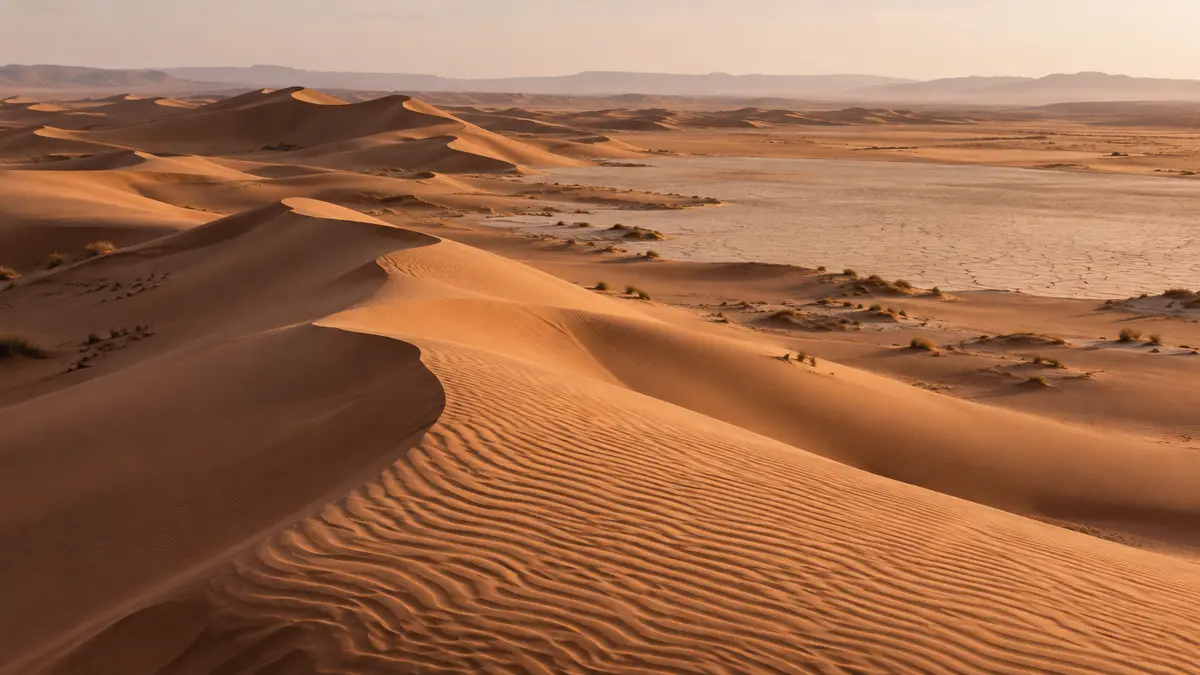
Three nights at one desert camp with two full days in the dunes, travelling by private 4×4 rather than on foot.
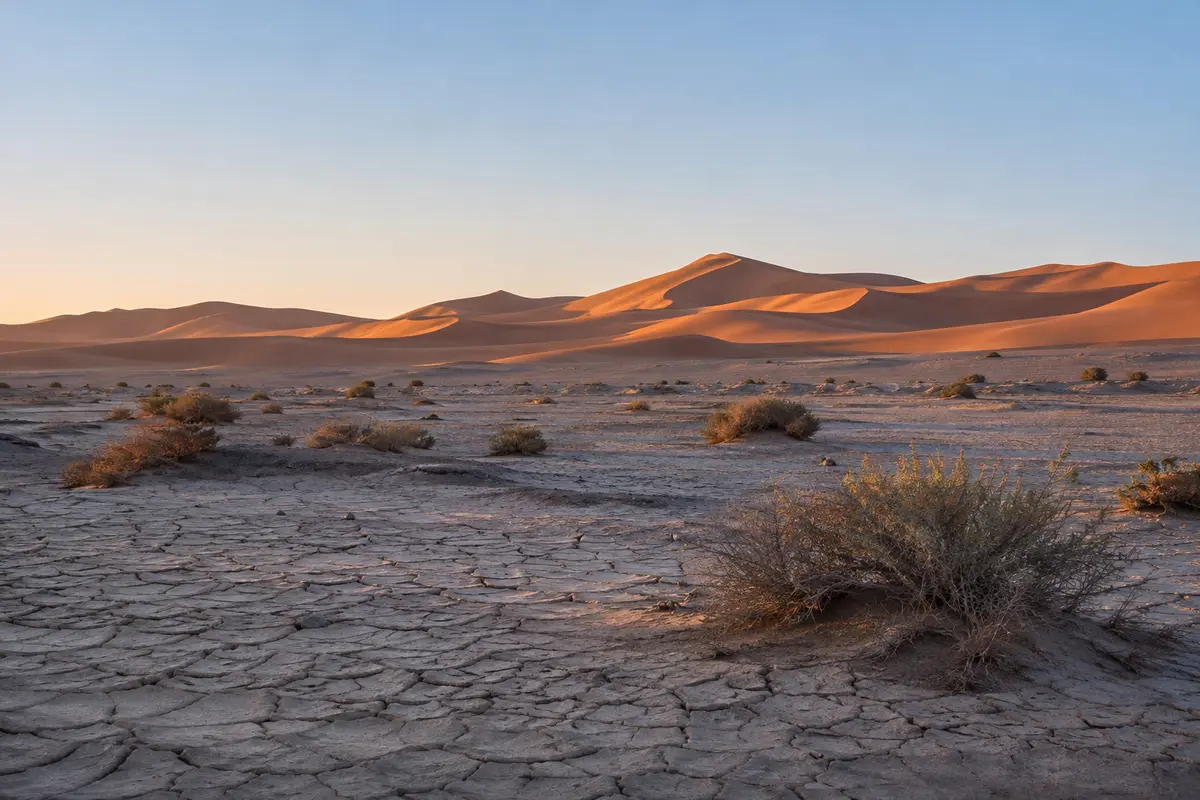
Four nights of slow desert time by private 4×4, with room to add dune days, change camp or start from further away.
One night at a smaller dune area reached by 4×4 from Foum Zguid, as an alternative to the main Erg Chigaga trip.
Five days on foot with a camel caravan and four nights at mobile bivouacs, crossing open desert before the dunes.
A week on foot through remote desert with a camel caravan and six nights at mobile bivouacs, for experienced walkers.
The small town on the N12 where the tarmac ends and the western route to Erg Chigaga begins.
A huge, usually dry lake bed in Iriki National Park, crossed by 4×4 on the way to the dunes.
One night at a desert camp, with Lac Iriki on the way in and sunset on the dunes.
The two gateway towns, the 4×4 and camel routes, and what self-driving really involves.
The eastern approach from M’Hamid, where the Drâa valley road ends, and a natural start for camel treks.
Send your dates and group size. We reply with a written itinerary and price — no payment needed to ask.