Illustration
4×4 tours
Why the road to Erg Chigaga ends in a 4x4, what a private off-road trip with a local driver involves, and the extras you can ask us to add.
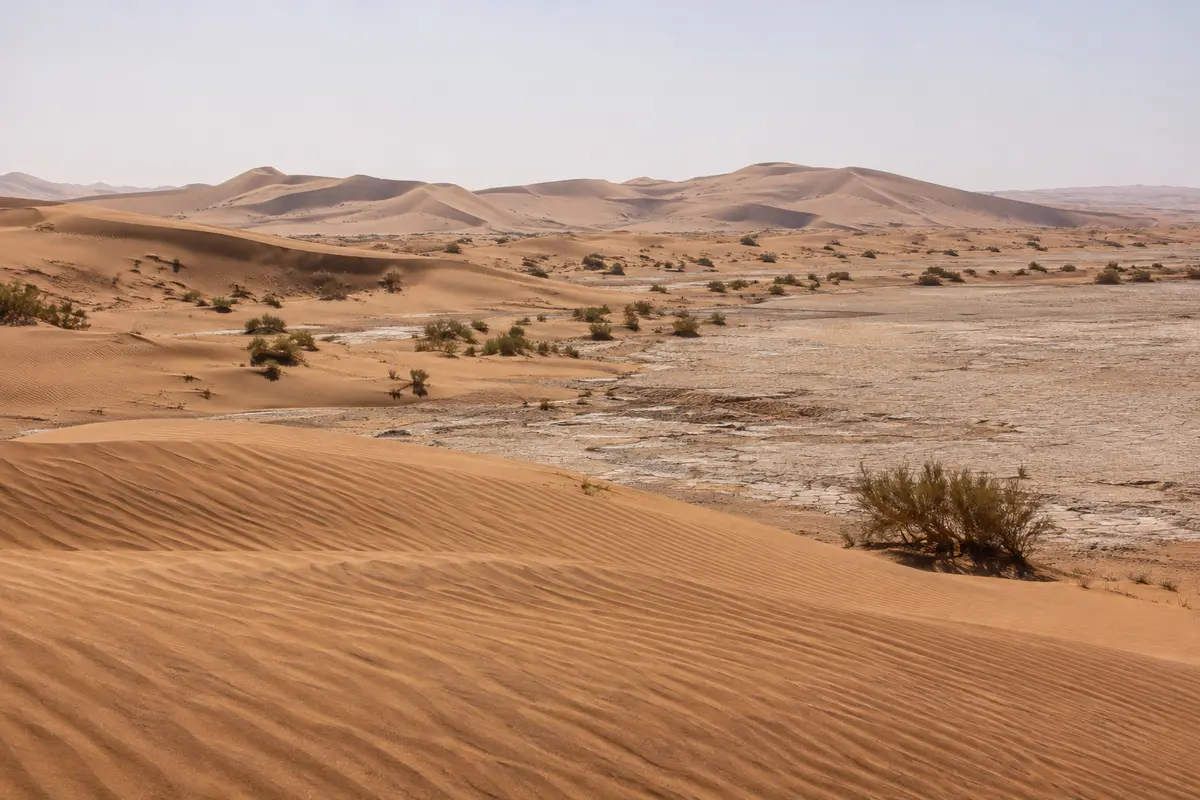
Driving yourself to Erg Chigaga is possible for some people, but it is not a casual detour from the tarmac. This guide explains what it takes, what tends to go wrong and why we strongly recommend a local driver or a guide vehicle, at least the first time.
Yes, it is possible to drive yourself to Erg Chigaga, and some experienced off-road drivers do. But the paved roads end at Foum Zguid and M’Hamid, and beyond them there is no road at all: just a network of unmarked tracks over stony plain, dry river beds, the lake bed of Lac Iriki on the western side, and soft sand. There are no services, no fuel and little or no phone signal for much of the way.
If you do not already have real soft-sand experience, we strongly recommend travelling with a local driver. Nothing on this page is a route guide, and it cannot guarantee conditions on the day.
Driving on soft sand is a skill of its own. It means reading the ground ahead, choosing a line, keeping momentum without overdoing it, lowering tyre pressures at the right moment, and knowing what to do the instant the vehicle starts to bog down. Experience on gravel roads, mud or snow helps, but it does not transfer directly. If you have never driven in dunes before, this is not the place to learn.
And the knowledge to use them. Recovery gear in the boot is no help if nobody in the car has used it.
There is no signage. Tracks braid into several lines, split, rejoin and shift with wind and the occasional rain. A track that was firm last month may be soft today. Phone maps and online routes are unreliable off-road, and GPS points shared online were correct for someone, at some time, in some conditions.
Download offline maps before you leave a larger town and use them to keep track of the big picture, but do not expect them to pick the line for you. Our map guide explains why straight-line maps mislead in the desert.
Everyone who drives in sand gets stuck sooner or later, including experienced drivers. Usually it is a matter of stopping, digging, lowering tyre pressures and using sand ladders. Sometimes it takes hours. Occasionally it needs another vehicle.
The serious risk is not the getting stuck itself but where it happens: far from help, with little or no signal, few passing vehicles, strong sun by day and cold by night. A minor problem can become a dangerous one if you are alone. That is why travelling with at least two vehicles makes such a difference.
Rental agreements and insurance policies commonly exclude off-road driving, and some exclude certain regions or unpaved roads altogether, even for 4×4 vehicles. If you damage the vehicle, need recovery or are stranded, the costs may fall on you. Read the contract carefully and ask the rental company in writing whether off-road driving is permitted. Carry your passport, licence and vehicle papers, as you may pass checkpoints on roads in the south.
The dunes lie close to the Algerian border, which is closed. Keep to established tracks and never head towards it.
Riders come to the region too. The same principles apply, with less margin: carry more water than you think you need, ride in a group, avoid riding alone off-road and know how to deal with a fall or breakdown far from help.
Travel with a local driver, at least the first time. A driver who crosses this desert regularly reads the tracks, knows where the soft sections lie, and adjusts the route to the wind and the season. It turns a stressful navigation exercise into a journey you can actually enjoy, with time to look at the landscape instead of the ground ahead of your bonnet.
If you would like to drive but are not confident in sand, ask us about other options, such as leaving your hire car in town and riding with a driver, or travelling with a local driver in a guide vehicle ahead of yours. What we can arrange for your dates is confirmed in your quote.
For the full range of access options, see how to get to Erg Chigaga.
Why the road to Erg Chigaga ends in a 4x4, what a private off-road trip with a local driver involves, and the extras you can ask us to add.
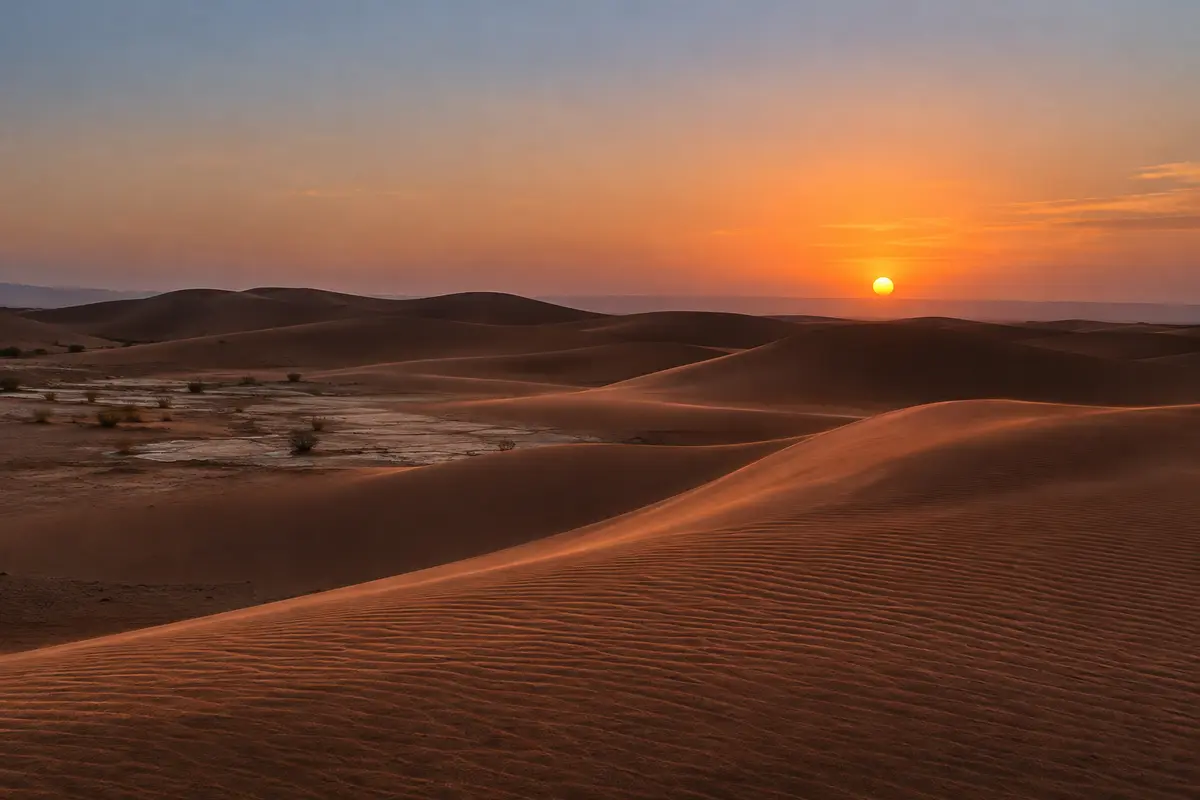
One night at a desert camp, with Lac Iriki on the way in and sunset on the dunes.
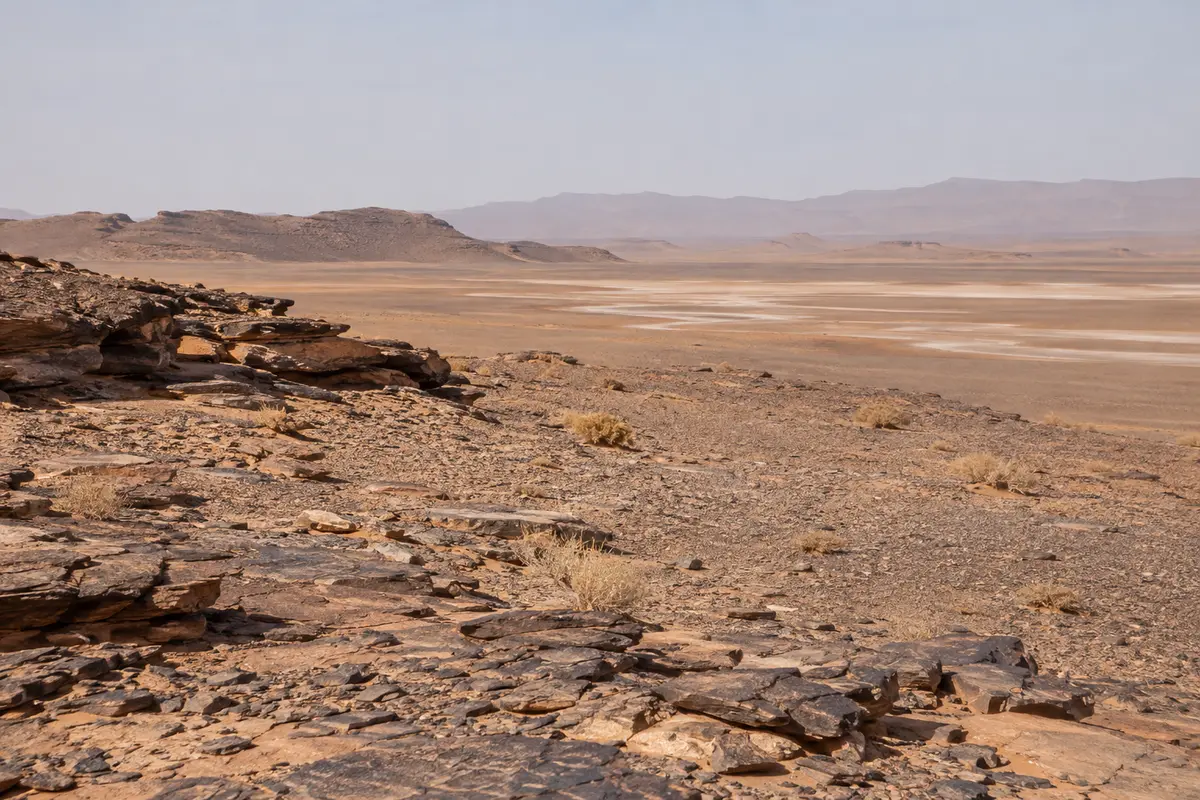
The western approach on tarmac to Foum Zguid, then off-road across Lac Iriki to the dunes.
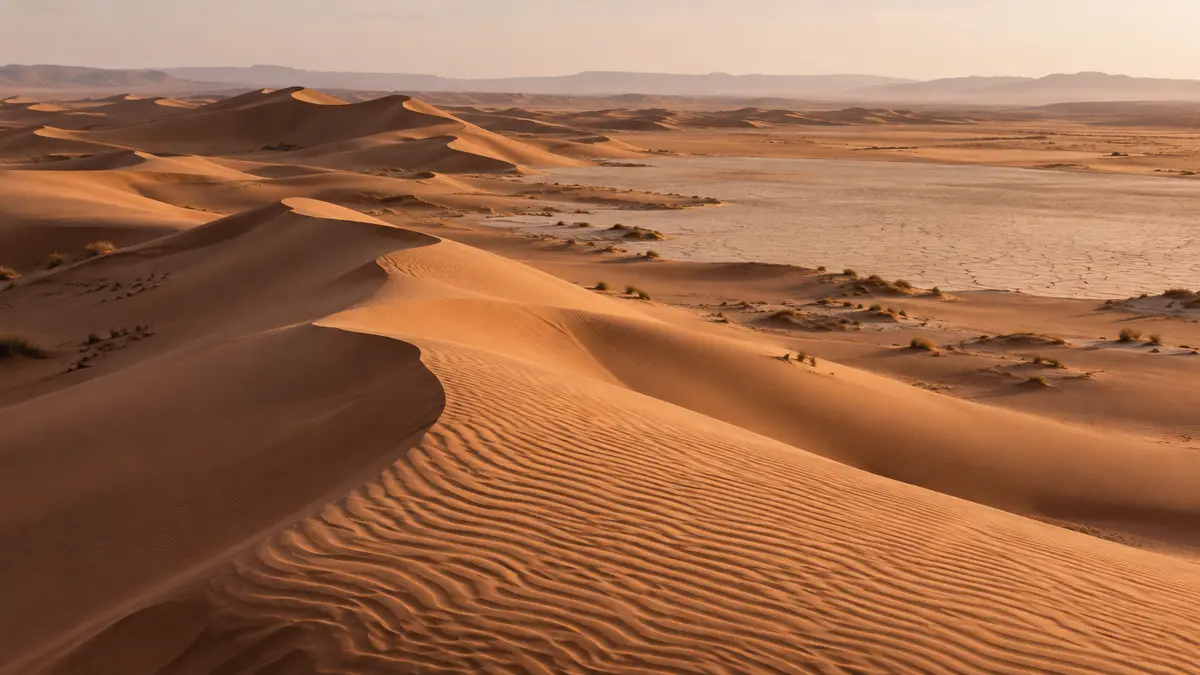
Where the dunes lie, how routes in vary, why online maps mislead off-road, and how to prepare offline maps.
The two gateway towns, the 4×4 and camel routes, and what self-driving really involves.
Send your dates and group size. We reply with a written itinerary and price — no payment needed to ask.