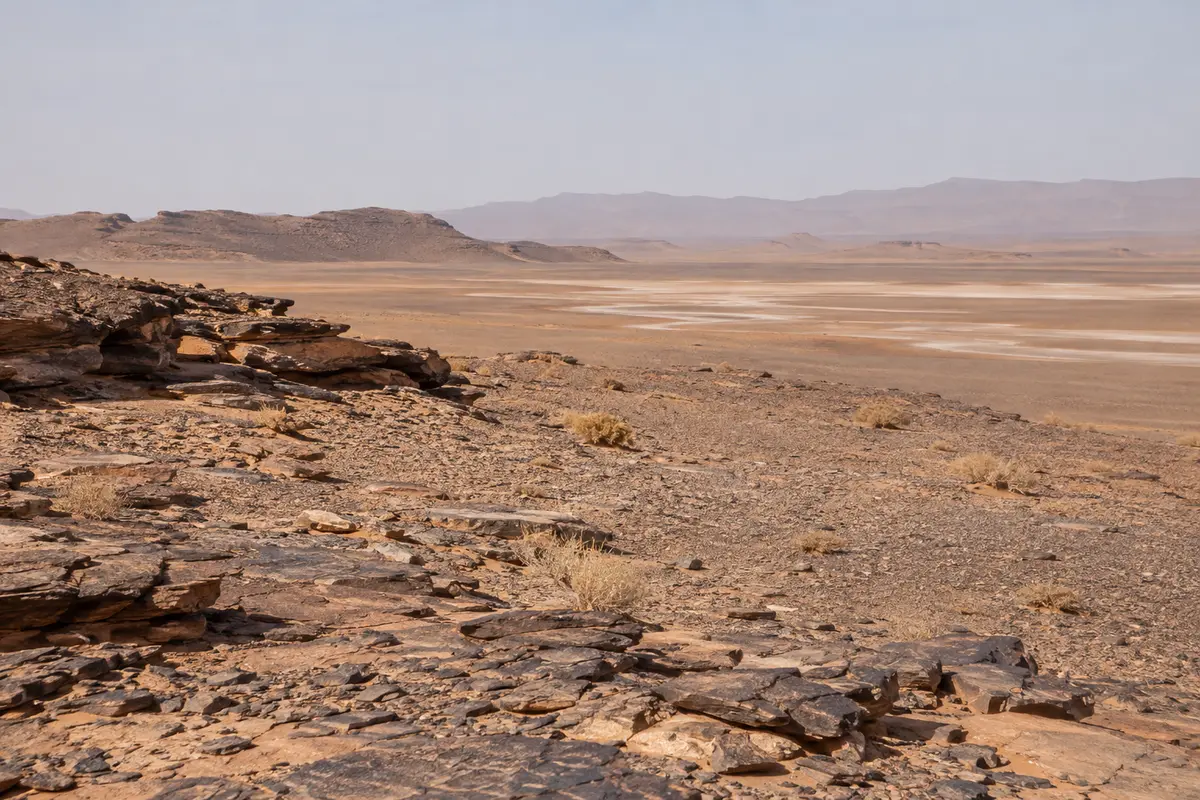
Tours from Foum Zguid
The western approach on tarmac to Foum Zguid, then off-road across Lac Iriki to the dunes.
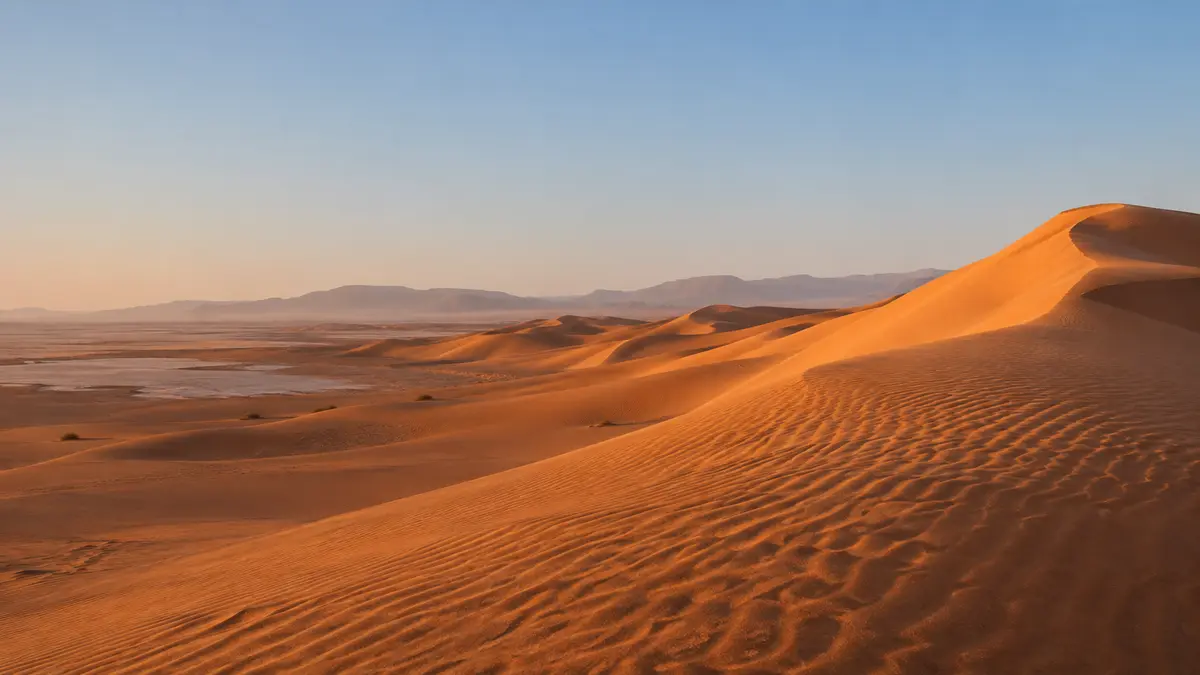
Erg Chigaga is a large sea of sand dunes in southern Morocco, close to the Algerian border, with no paved road to its edge. Travellers reach it by 4×4 or with a camel caravan from the small towns of Foum Zguid in the west or M’Hamid in the east, and most spend at least one night at a camp among the dunes.
Erg Chigaga sits in the far south of Morocco, on the north-western edge of the Sahara and close to the border with Algeria. The word erg describes a sea of sand dunes, as opposed to the stony desert plains that cover most of the region. Here the sand gathers into a long belt of ridges and crests, rising out of flat, open country.
There is no village beside the dunes and no paved road leading to them. The two gateways are small towns on the edge of the tarmac:
From either town, the final stretch is off-road. That distance is the main reason Erg Chigaga feels so different from Morocco’s better-known dunes.
You will see the name written as Chigaga, Chegaga and occasionally Chgaga, with or without Erg in front. These are simply different transliterations of the same local name. English-language sources tend to use Chigaga, while French and Spanish sources more often write Chegaga. We use Erg Chigaga throughout this site, and it is the same dune field whichever spelling you searched for.
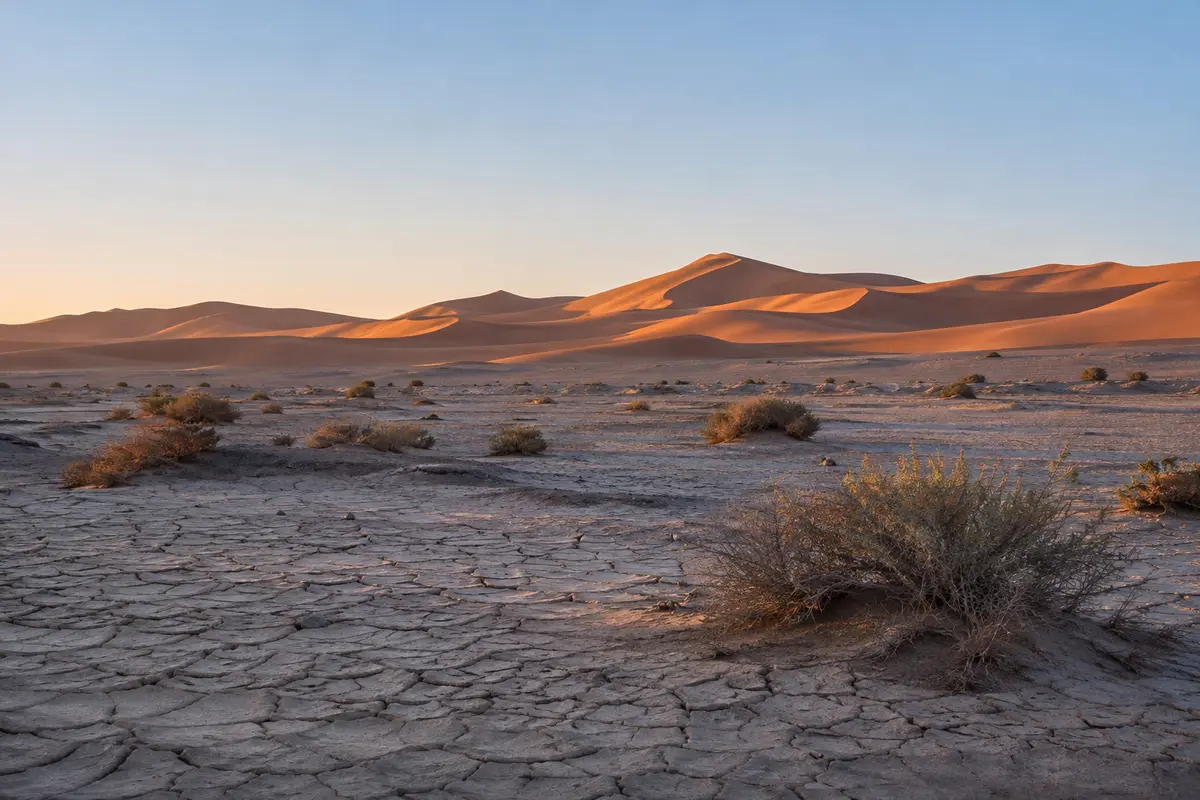
The dune field is commonly described as stretching for several tens of kilometres from end to end, though figures vary between sources and depend on where you draw the edge. Within it, the sand is far from uniform. Some areas are low, rolling and easy to walk; others build into tall, sharp-crested ridges that take real effort to climb. The tallest are often described as rising several tens of metres above the surrounding plain, but published heights vary widely and we prefer not to quote one.
The colour of the sand changes through the day, from pale and flat at midday to deep orange and rose at sunset and sunrise. This is why we always plan around those two moments.
Much of what you cross to reach the dunes is not sand at all. Expect wide gravel plains, dark stony ground, dry riverbeds and, on the western route, the hard, flat surface of Lac Iriki, a lake bed that is dry for most of the year. These open spaces give the journey its scale, and they explain why the drive in is part of the experience rather than a transfer.
Life here is sparse but present. Around the edges of the dunes and along dry watercourses you are likely to see scattered acacia trees and low scrub such as tamarisk. After rare rain, small plants can briefly appear on the plains.
Animals are mostly discreet. In the early morning the sand is often marked with the tracks of beetles and small lizards, and you may notice birds around scrub and camps. Larger mammals such as foxes live in desert regions like this, but sightings are never guaranteed. You may also pass herds of goats or camels belonging to semi-nomadic families who still use the wider area.
You need a 4×4 with an experienced driver, or you walk in with a camel-supported trek. There is no public transport to the dunes and no road suitable for an ordinary car.
Most travellers first reach one of the two gateway towns on tarmac, then continue off-road:
Driving times on the desert tracks depend on the season, recent wind or rain, and how many stops you make, so we confirm a realistic timetable in your itinerary rather than quoting fixed hours. Our guide to getting to Erg Chigaga covers each option in detail.
Erg Chigaga can be visited all year, but the experience changes a lot with the seasons:
We avoid quoting monthly temperatures here. Our Erg Chigaga weather guide explains the seasonal patterns in more detail.
A night in the dunes is the heart of most visits. Camps range from simple bivouacs used on treks to standard tented camps and more comfortable camps with larger tents. What each one offers, from bathrooms and hot water to beds and charging, varies from camp to camp, so we confirm the details in writing before you book. Our desert camps guide compares the main styles and lists the questions worth asking.
Plan to be offline. Mobile coverage around Erg Chigaga is patchy and unreliable: some visitors pick up a weak signal from the top of a dune or near certain camps, while others have nothing for the whole stay. Coverage also varies by network. We do not promise Wi-Fi at any camp.
Before you leave the tarmac:
Erg Chigaga is visited by travellers year-round, but it is remote, and that shapes how you should approach it.
Scorpions and snakes live in the Sahara but are rarely encountered by visitors. Shaking out shoes left outside the tent is a sensible habit.
The desert around Erg Chigaga is not empty. Families live and graze animals across the region, and the dunes are shared by everyone who visits.
Erg Chebbi, the dune field beside Merzouga, is reachable by paved road, has many hotels and camps, and is much busier. Erg Chigaga takes more effort: an off-road crossing, fewer camps and very little infrastructure. In return you get a stronger sense of distance and quiet. If your time is short, or if long off-road drives do not appeal, Merzouga may honestly suit you better. Our Erg Chigaga vs Merzouga guide compares the two in detail.
The simplest way to start is to tell us your dates, how many of you are travelling, where you are coming from and the kind of camp you would like. We reply with a written itinerary and price. Browse our desert tours for typical trip lengths, or contact us with your plans.
The western approach on tarmac to Foum Zguid, then off-road across Lac Iriki to the dunes.
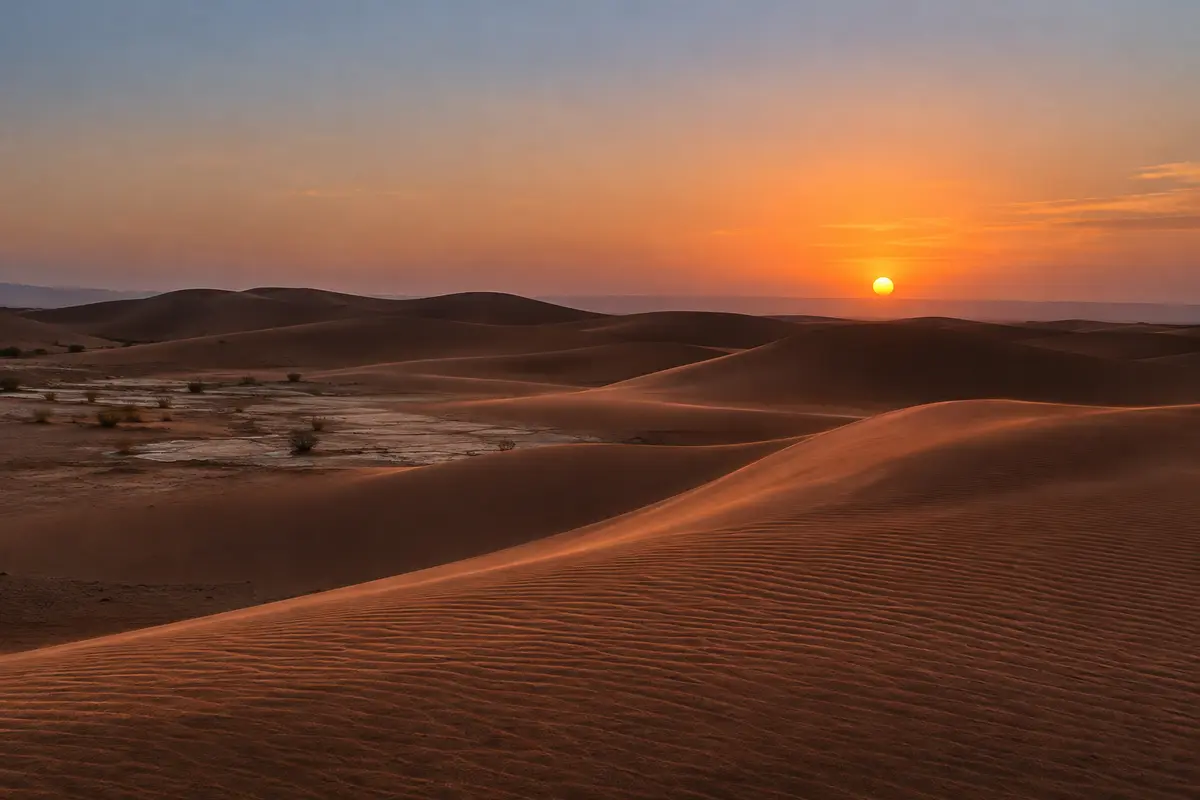
One night at a desert camp, with Lac Iriki on the way in and sunset on the dunes.
Simple bivouacs, standard camps and luxury set-ups compared, with the questions to ask before you book.
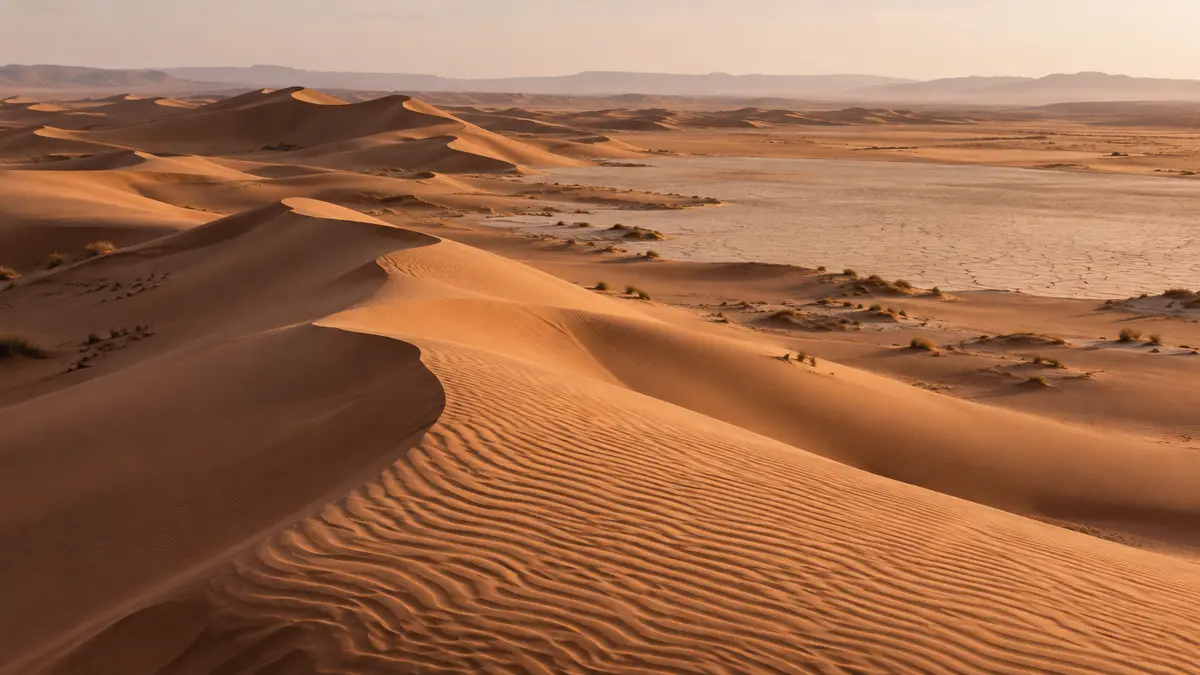
The two gateway towns, the 4×4 and camel routes, and what self-driving really involves.
Autumn, winter, spring and summer in the dunes, and what each season means for your trip and your bag.
Send your dates and group size. We reply with a written itinerary and price — no payment needed to ask.