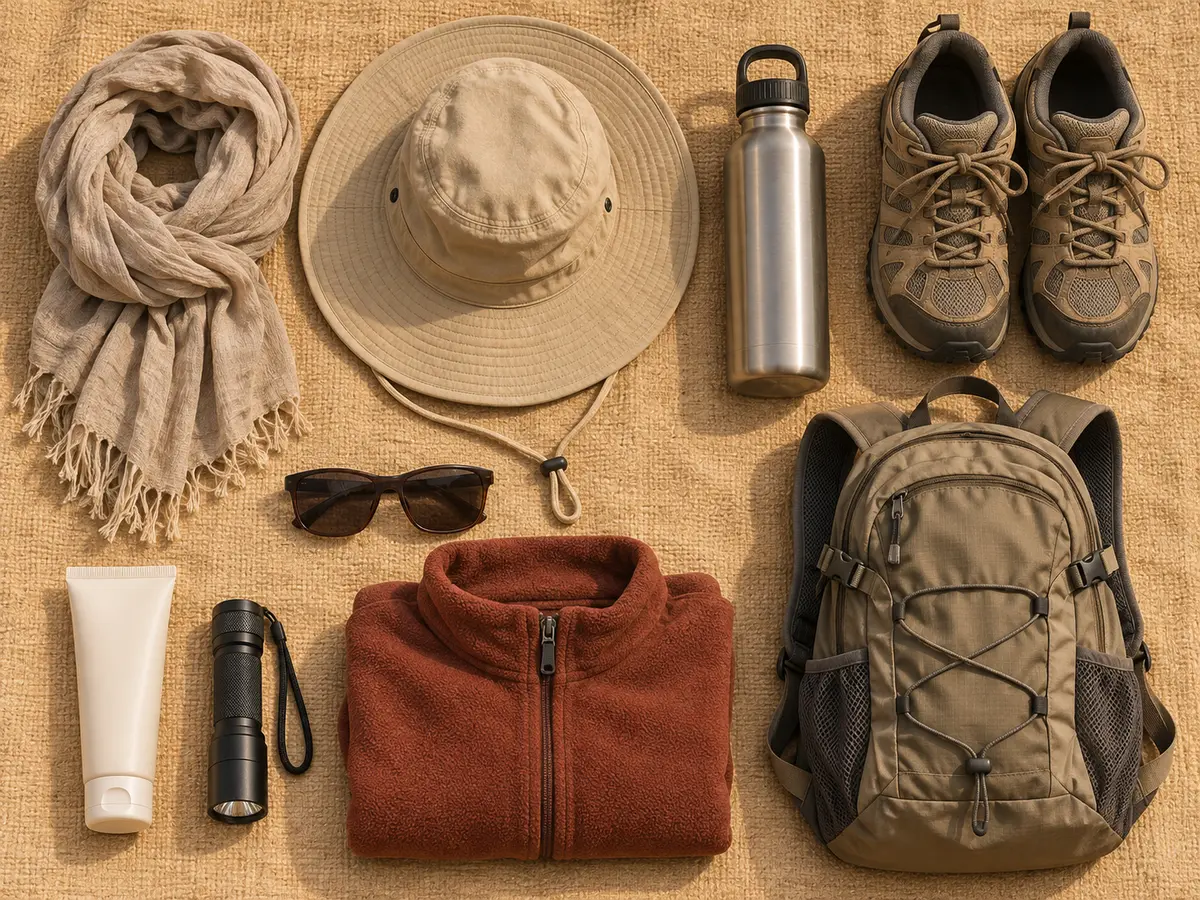
Erg Chigaga travel guide
Where the dunes are, how long to stay, and the practical details worth sorting before you go.
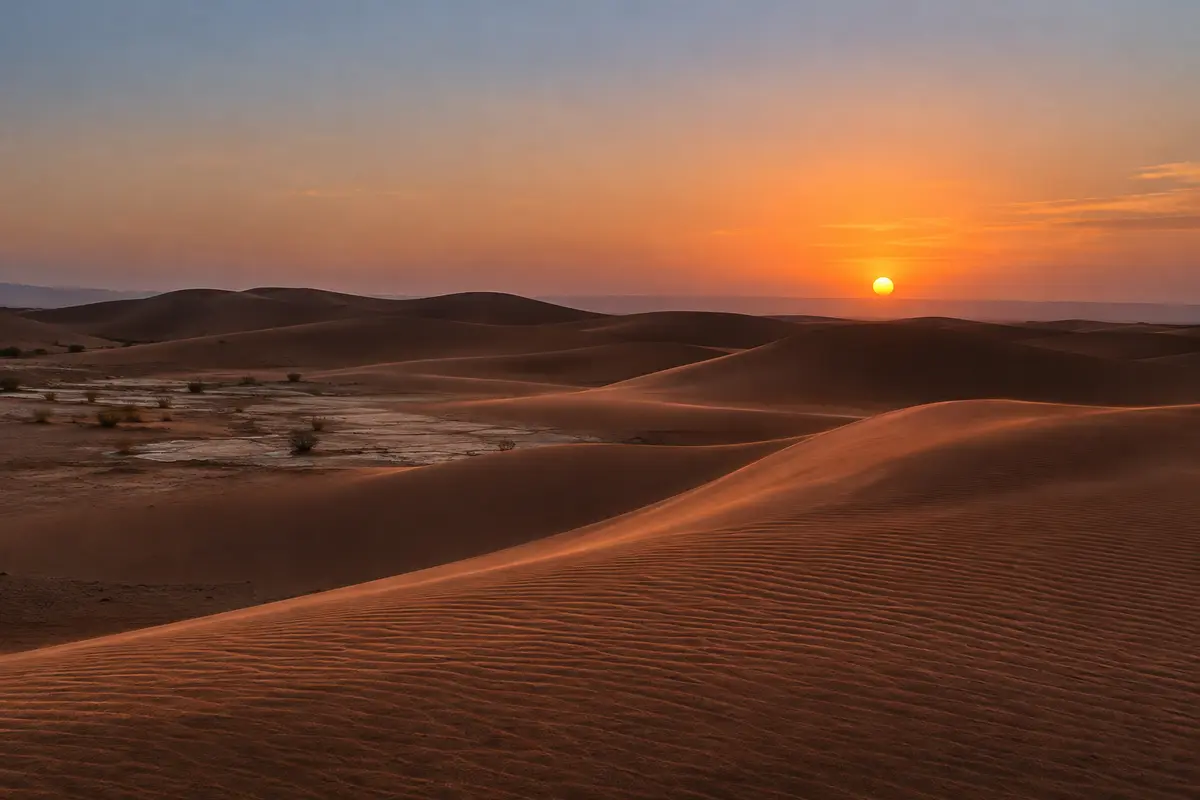
These are the questions we are asked most often about Erg Chigaga, grouped by theme and answered plainly. Where a topic needs more space, we point you to the guide that covers it in full.
Erg Chigaga is a large sand sea in the far south of Morocco, near the Algerian border. The paved roads end at Foum Zguid in the west and at M’Hamid El Ghizlane in the east, and the dunes lie out in open desert between and beyond them. Erg Chigaga, Erg Chegaga and Chgaga are all transliterations of the same local name: English-language sources tend to write Chigaga, French-language ones Chegaga. If you are unsure what an erg actually is, our short explainer on what an erg is covers it.
Autumn and spring are the most comfortable seasons for most people, with warm days and cool nights. Winter days are often mild and clear, but nights are cold, and in December and January they can drop close to freezing in the open desert. Spring is the windiest time of year. Summer is very hot and needs careful planning. The weather guide describes each season and what it means for your bag.
It depends mostly on how far you are travelling to reach a gateway town. One night in the dunes is the classic first visit: you arrive in the afternoon, climb a ridge for sunset and see sunrise before leaving. A second night adds a full day in the desert with nothing scheduled. From Marrakech we normally suggest at least three days in total, because the drive across the mountains takes a full day on its own. Compare the 2-day trip and the 3-day trip.
The sky is very dark on any clear night, so the month matters less than the moon. Around the new moon, the Milky Way is often easy to see with the naked eye; near the full moon, fainter stars disappear. Check a moon-phase calendar before you fix your dates, and remember that clear winter nights are dark and cold, while spring nights can be hazy if the wind has lifted sand.
It changes through the year, so we do not publish fixed times. Your driver or guide tells you the evening before when to get up and how long the walk to a good viewpoint takes. Sunrise is usually the coldest part of the day, so keep a warm layer by your bed.
Only on foot. An ordinary car can take you to Foum Zguid or M’Hamid on tarmac, but beyond that the route crosses stony plain, dry river beds, soft sand and, on the western side, the dry bed of Lac Iriki. You need a 4×4 with a driver who knows the tracks, or several days of walking with a guide and camels. See how to get to Erg Chigaga.
Neither is right for everyone. Foum Zguid is usually the logical gateway from Marrakech via Ouarzazate and Taznakht, or from Agadir and the south-west, and it is the side we specialise in. M’Hamid usually makes more sense if you are already in the Drâa valley or want to trek. Our Foum Zguid vs M’Hamid comparison sets out the trade-offs honestly.
With a local driver in a well-maintained 4×4, travelling in daylight. Drivers who cross this desert regularly read the tracks, avoid soft sections and know when to wait out wind or rain. Self-driving is possible only for people with real soft-sand experience and proper equipment, and we do not recommend it for a first visit. Our self-drive guide explains why.
Ask us when you request a quote. Where to meet your driver and where to leave a car while you are in the desert is confirmed in your itinerary.
Distances look short on a map but mean little off-road, where speed depends on the surface, the wind and recent rain. We confirm a realistic timetable for your dates instead of quoting fixed hours. The distance guide explains what affects travel time.
They range from simple bivouacs to camps with more comfortable beds and facilities. What a particular camp offers, including the toilets, showers, bedding and any charging, is confirmed in writing before you book. Our camps page lists the questions worth asking.
Probably not entirely. Erg Chigaga has far fewer visitors than Erg Chebbi near Merzouga and no village at the dunes, but at busy times you will see other groups and other camps. Nights are usually quiet. If solitude matters most, ask about a more secluded camp or a trek.
Tell us your dietary needs when you request a quote, and we confirm in writing what is possible at your camp. Remote camps plan their supplies in advance, so early notice helps.
Comfortable, closed walking shoes or trainers for the journey and for climbing dunes, and sandals for camp. Sand gets into everything, so many people walk barefoot on the dunes once the sand has cooled in the evening. In summer the sand gets very hot by day. The packing list has the full checklist.
For most travellers the main risks are environmental: heat, sun, dehydration and cold nights. Sensible clothing, plenty of water and a pace that suits the group deal with most of them. The dunes lie close to the Algerian border, which is closed, so stay on the routes your driver or guide uses. Before you go, read your own government’s current travel advice for Morocco and take out travel insurance that covers your activities.
It can be dangerous for people who are not used to it. In the hottest months, activities are kept to early morning and evening, with a long rest in the shade in between, and multi-day walking treks are generally not advisable. Drink regularly, cover up and learn the signs of heat exhaustion.
Rain is rare, but when it comes it can be heavy. Dry river beds can fill quickly and parts of Lac Iriki can turn soft or muddy. Drivers may change route, wait or delay a crossing, and these decisions are made on the day with safety first. Our booking questions explain how weather changes are handled.
A long way. There is no clinic in the dunes, and help means driving back to a town. Bring any medication you need, a small first-aid kit and rehydration salts, and tell us about medical conditions before you book.
Cash. There are no cash machines beyond the gateway towns, and card payment at a desert camp should not be assumed. Draw dirhams in a larger town such as Marrakech, Ouarzazate, Zagora or Agadir before heading south.
Tipping is customary in Morocco and appreciated by drivers, guides, cameleers and camp staff, but it is always your choice and should reflect the service you received. If you would like guidance for your group, ask us before you travel.
That depends on the trip, the camp and the number of people. Your written quote lists exactly what is included and what is not. See prices and quotes for how we put them together.
Do not plan on either. Mobile coverage fades as you leave the tarmac and is patchy or absent across much of the route and in the dunes. You may find a signal on a high ridge, or you may not. Download offline maps, tickets and documents before leaving town, and tell family you may be out of contact overnight.
Do not assume so. Charging depends on the camp and is confirmed per camp. Bring a fully charged power bank, and keep it warm on winter nights, as cold drains batteries quickly.
Yes, and many children love the dunes. The realistic challenges are long, bumpy drives, the sun, cold nights and distance from medical help. Tell us the children’s ages and we will advise honestly on pacing, stops and which trip suits. Our guide to Erg Chigaga with kids covers it age by age.
Often, yes, with the right pace. The off-road drive is long and can be bumpy, walking on soft sand is tiring, and nights can be cold. Tell us about any back, joint or heart problems so we can suggest a gentler itinerary, more stops or a camp with easier facilities. A private trip lets you set your own pace.
We would rather be honest than encouraging: soft sand, uneven ground and remote camps make the dunes very difficult for wheelchair users, and facilities differ between camps. If you or someone in your group has limited mobility, tell us exactly what you need and we will say plainly what is and is not realistic.
Send it through the contact page with your dates and where you are coming from, and we will reply with a straight answer. For the wider planning picture, start with the Erg Chigaga travel guide, or browse all Erg Chigaga tours.
Where the dunes are, how long to stay, and the practical details worth sorting before you go.
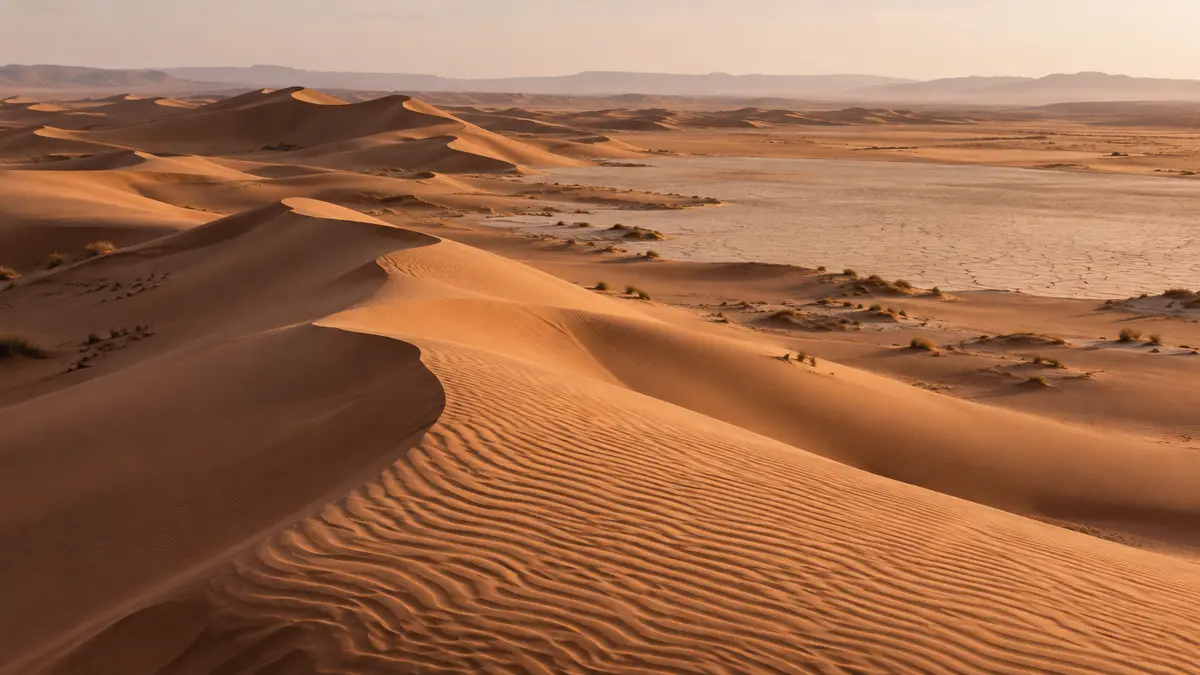
The two gateway towns, the 4×4 and camel routes, and what self-driving really involves.
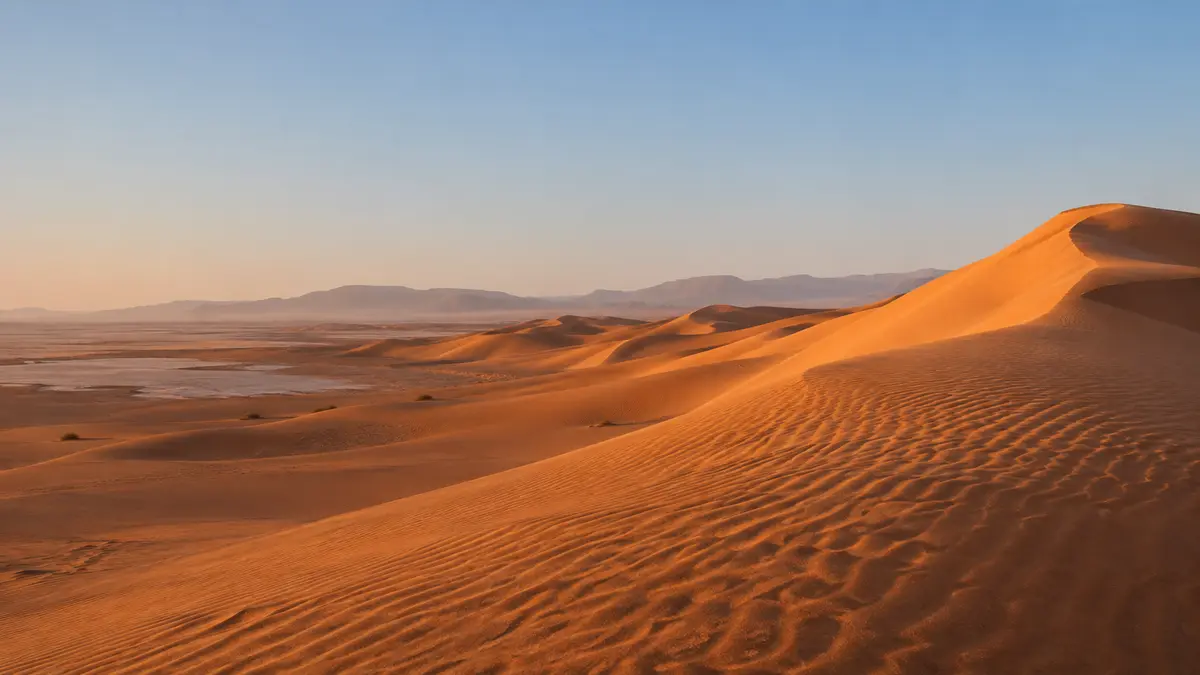
Compare Erg Chigaga tours by length, starting point, 4x4 or trek and camp comfort, from a long day trip to multi-day camel treks, all arranged privately.
Simple bivouacs, standard camps and luxury set-ups compared, with the questions to ask before you book.
One night at a desert camp, with Lac Iriki on the way in and sunset on the dunes.
Send your dates and group size. We reply with a written itinerary and price — no payment needed to ask.