Erg ChigagaDesert Tours
Request a quote
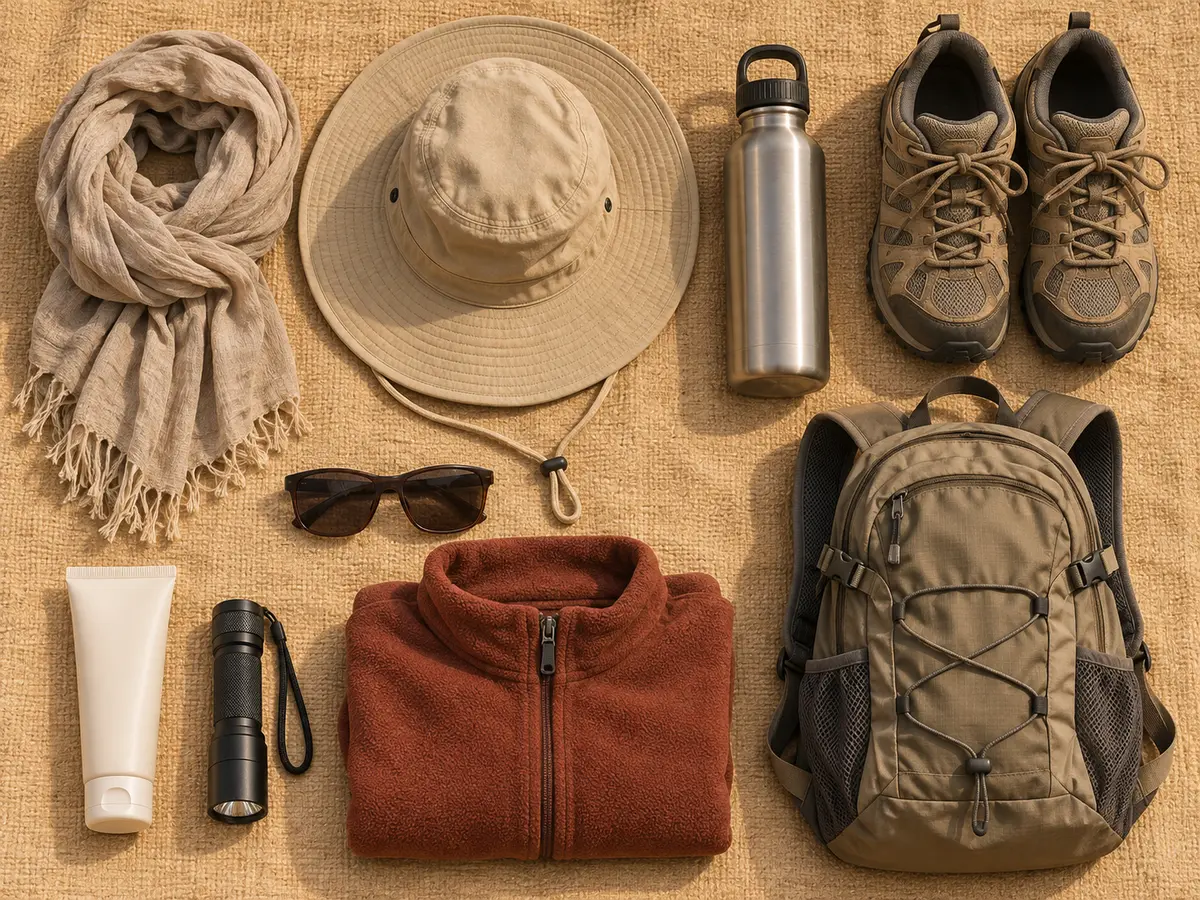
Desert travel essentials laid out on woven cloth: hat, scarf, sunglasses, fleece, boots, torch, sunscreen and backpack. Illustrative image
Checklists by trip and season

What to pack for Erg Chigaga

Packing for the desert is mostly about layers, sun and sand. These checklists cover a 4×4 overnight, a camel trek, winter and summer, so you can bring what you need without hauling a heavy bag across the dunes.

The principles

Three things shape a desert packing list.

  1. Layers. The gap between day and night is large. An afternoon in a T-shirt can be followed by a night when you want a jacket, a hat and a warm sleeping layer.
  2. Sun and sand. The light is strong, the air is dry and wind carries fine sand into everything. Cover up and protect your eyes, skin and electronics.
  3. Light luggage. Space in the vehicle is shared, and on a trek your bag travels on a camel. A small overnight bag for the desert makes life easier.

Seasons make a big difference. The weather guide explains what each part of the year is like.

The core list for every trip

  • Passport, travel insurance details and a printed or offline copy of your itinerary
  • Cash in dirhams, drawn in a larger town before heading south
  • Sunglasses, ideally wraparound
  • Sun hat
  • High-factor sunscreen and lip balm
  • A scarf, buff or headscarf against sun, wind and blowing sand
  • A warm layer for the evening, such as a fleece or light down jacket
  • Comfortable closed shoes or trainers
  • Sandals or flip-flops for camp
  • Head torch, with a red-light mode if you have one
  • Refillable water bottle
  • Power bank and charging cables
  • Personal medication, a small first-aid kit and rehydration salts
  • Hand sanitiser, tissues and wet wipes
  • A small bag for your rubbish, to take back out

4×4 overnight

On a 2-day trip or similar, you travel by vehicle and sleep at a camp, so you can bring a little more. The main thing is to keep what you need for the night in one small bag.

  • Small overnight bag or daypack, separate from your main luggage
  • Change of clothes and something comfortable to sleep in
  • Warm socks and a hat for the evening and sunrise
  • Toothbrush, toiletries and a small towel
  • Earplugs, in case the wind picks up at night
  • Snacks for the drive
  • Motion-sickness tablets if you are prone to it, as parts of the tracks are bumpy
  • Camera, spare battery and a cloth to wipe off sand

What your camp provides, including bedding, towels, toilets, showers and charging, is confirmed in writing before you book. See our camps page for the questions worth asking.

Camel trek

On a trek such as the 3-day trek, you walk for much of each day and sleep at simple mobile bivouacs. Camels carry the luggage, so weight and bag type matter.

  • Soft duffel or rucksack rather than a hard suitcase
  • Daypack for water, sunscreen and a layer while you walk
  • Broken-in walking shoes or light boots
  • Gaiters or high socks to keep sand out, if you find it bothers you
  • Two or three light, long-sleeved tops and loose trousers
  • Warm layer and hat for evenings
  • Sleeping bag liner, and a sleeping bag if the season and camp require it (ask us)
  • Blister plasters and foot care
  • Wet wipes and biodegradable soap
  • Toilet paper and a bag to carry used paper out
  • Extra power bank, as charging is unlikely on the move

Washing and toilet arrangements on treks are simple and are confirmed per trip. The camel trekking page explains what a day on the move looks like.

Winter, roughly December to February

Winter days are often mild and sunny, but nights are cold and can drop close to freezing. Pack as if for a cold night outdoors.

  • Proper warm jacket, such as down or synthetic insulation
  • Thermal base layers for evenings and sleeping
  • Warm hat, gloves and thick socks
  • Warm sleepwear
  • A sleeping bag or liner, if your camp or trek calls for it (ask us)
  • Hot-water bottle, if you like one
  • Moisturiser, as cold dry air is hard on skin
  • Spare batteries kept warm in a pocket, as cold drains them fast

Days are short in winter, so a head torch matters more than ever.

Summer, roughly June to September

Summer is very hot by day. Trips are possible but planned around the heat, with activities early and late and a long rest at midday.

  • Loose, light, long-sleeved clothing in pale colours
  • Wide-brimmed hat
  • Highest-factor sunscreen, reapplied often
  • Rehydration salts
  • A larger water bottle or two
  • A light scarf to wet and wear around your neck
  • Sandals that protect against hot sand
  • A light layer for the evening, which can still be welcome

Learn the signs of heat exhaustion, drink before you feel thirsty and tell your driver or guide straight away if you feel unwell.

Spring and autumn

Spring and autumn are the most comfortable seasons for most travellers, with warm days and cool nights. Use the core list with a good warm layer. Spring is the windiest time of year, so add:

  • Wraparound sunglasses or glasses rather than contact lenses on windy days
  • A face covering against blowing sand
  • Zip-lock bags or a dry bag to protect your phone and camera

What to leave at home

  • Hard suitcases, which are awkward in a vehicle and impossible on a camel
  • Valuables you do not need
  • Heavy books and anything you would hate to fill with sand
  • Drones, unless you have checked current Moroccan rules carefully; they are tightly regulated
  • Single-use plastic you could avoid; there is nowhere to dispose of rubbish in the desert

Clothing and respect

Desert camps are relaxed, but in towns and villages on the way, clothing that covers shoulders and knees is appreciated. A light scarf is useful for this as well as for sun and sand.

If you are still unsure what to bring for your dates, ask when you request a quote. For the rest of your planning, see the Erg Chigaga travel guide.

Questions travellers ask

What shoes should I wear at Erg Chigaga?

Comfortable closed shoes or trainers for the journey and for climbing dunes, plus sandals for camp. On a trek, bring broken-in walking shoes. Many people walk barefoot on the dunes once the sand has cooled, but it gets very hot by day in summer.

Do I need a sleeping bag?

Usually not on a 4×4 trip, but it depends on the camp and the season. Ask us what bedding your camp provides. On winter trips and treks, a warm sleeping layer or liner is often worth bringing.

How big a bag can I bring?

Pack light. Vehicle space is shared and on a trek your luggage travels on a camel. A small overnight bag for the desert, with your main luggage left in the vehicle or at your hotel, is usually the easiest approach. Ask us what is possible for your trip.

Should I bring a suitcase?

A soft bag or rucksack is much easier than a hard suitcase in a 4×4 and on sand. If you are on a longer Morocco trip with a suitcase, ask us about leaving it in the vehicle or at your accommodation.

How cold does it get at night?

Colder than most people expect. Even after a warm day, clear skies let the heat escape fast, and winter nights can drop close to freezing. Bring warm layers in every season except the height of summer.

Is drinking water provided?

What is included, including drinking water, is listed in your written quote. Bring a refillable bottle either way, and drink regularly, as dry desert air dehydrates you faster than you notice.

Plan your trip

Send your dates and group size. We reply with a written itinerary and price — no payment needed to ask.

Request a quote