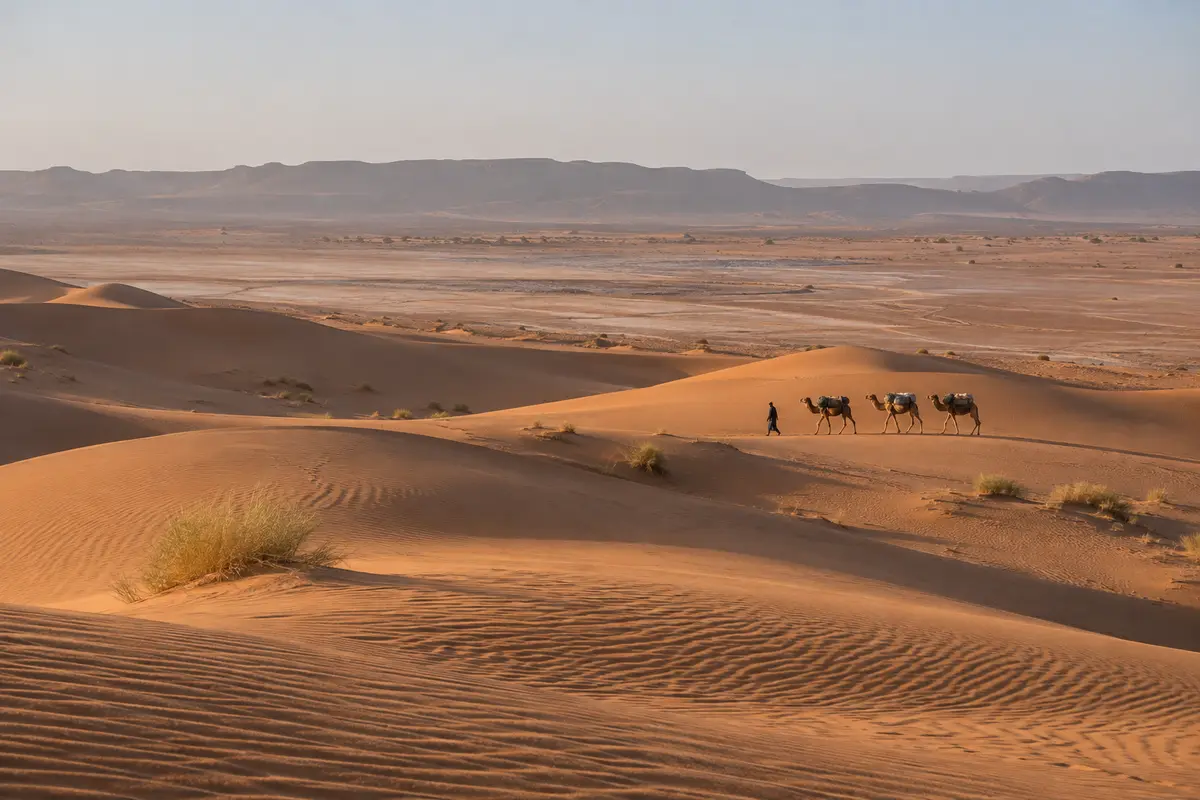
3-day camel trek
Walk towards the dunes for three days with a small camel caravan, sleeping two nights at simple mobile bivouacs.
Private trip Trek Price on request
Zagora is the last sizeable town on the road down the Drâa valley. From here the tarmac carries on south to M’Hamid, where the desert crossing to Erg Chigaga begins. For most travellers already in Zagora, the eastern side is the sensible way in.
Zagora sits in the Drâa valley, a long ribbon of palm groves, earthen villages and kasbahs running south-east from Ouarzazate. Many travellers spend a night here on a southern Morocco itinerary, and the town has hotels, guesthouses, cafés, banks and fuel.
What Zagora does not have is the big dunes. Erg Chigaga lies well beyond the end of the road, out to the south-west, and getting there involves two quite different stages: a paved drive further down the valley, then an off-road crossing.
Many trips are sold as a night in the Zagora desert. Around the town there is stony desert and a few small dune areas, and camps close to Zagora can be reached in a short drive. That makes a pleasant, easy evening among small dunes, but it is a different experience from the large erg further south. If a trip says “Sahara” or “Erg Chigaga”, check where the camp actually is.
From Zagora, the road continues south along the Drâa to M’Hamid El Ghizlane, where the paved road ends. It is an easy road to drive, passing villages, palm gardens and the occasional patch of sand blown across from the surrounding desert.
The village of Tamegroute, known for its green-glazed pottery, lies on this road and is a common place to stretch your legs. Like any stop, it is an idea to discuss rather than a fixed part of the plan.
At M’Hamid the tarmac stops and the desert begins in earnest. The eastern route to Erg Chigaga crosses sandy stretches, scrubby plains, dry riverbeds and areas of smaller dunes before the main dune field rises ahead. It is generally sandier than the western approach from Foum Zguid, and it does not cross Lac Iriki.
This part needs a 4×4 with a driver who knows the tracks, or a camel-supported trek. There are no signposts and phone signal is patchy. Our page on Erg Chigaga from M’Hamid describes the eastern route in more detail.
From a base in Zagora, the realistic choices are:
Zagora is also connected to Foum Zguid by the N12, a long paved road through sparsely populated country to the west. Taking it means a longer road day before the desert starts, so we only suggest it when there is a clear reason: you want to cross Lac Iriki, or you are continuing towards Tata or Agadir afterwards. Otherwise, from Zagora, M’Hamid is the more natural gateway.
If you are travelling from Marrakech and only passing through Zagora, see Erg Chigaga from Marrakech for the overall shape of the trip.
You can drive yourself to M’Hamid in an ordinary car, or we can quote a transfer from your accommodation in Zagora. If you arrive by car, the meeting point and where to leave the car are confirmed in writing before you travel. Fill up with fuel and carry enough cash before leaving Zagora, as services further south are limited.
A verified map of the Zagora to M’Hamid road and the desert tracks beyond will be added once the route has been recorded on the ground. We do not publish straight-line maps, because the real tracks bend around terrain and shift with conditions.
Tell us where you are staying in Zagora, your dates, how many of you are travelling and whether you would rather walk or go by 4×4. We reply with a written itinerary and a price for your group. For an overview of all the approaches, see how to get to Erg Chigaga, or contact us to start.
Walk towards the dunes for three days with a small camel caravan, sleeping two nights at simple mobile bivouacs.
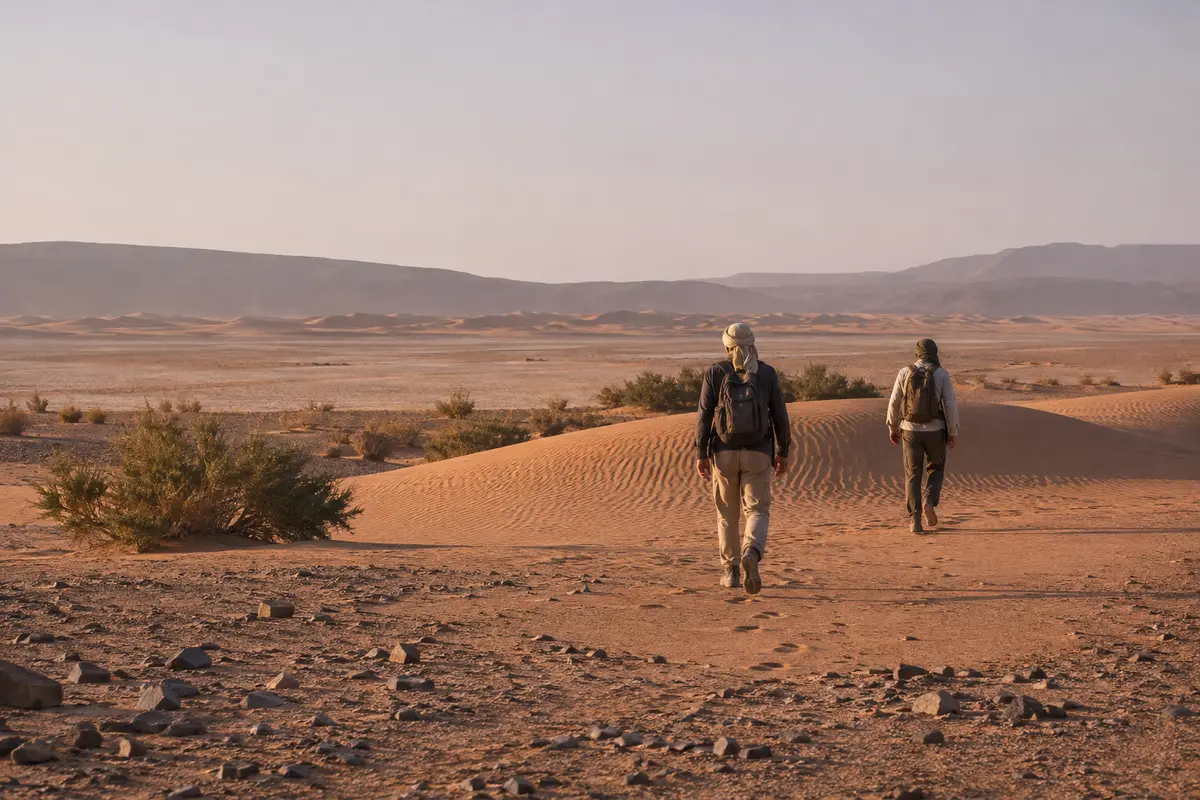
Four days on foot with a camel caravan and three nights at mobile bivouacs, for walkers who want a deeper desert route.
Five days on foot with a camel caravan and four nights at mobile bivouacs, crossing open desert before the dunes.
A week on foot through remote desert with a camel caravan and six nights at mobile bivouacs, for experienced walkers.
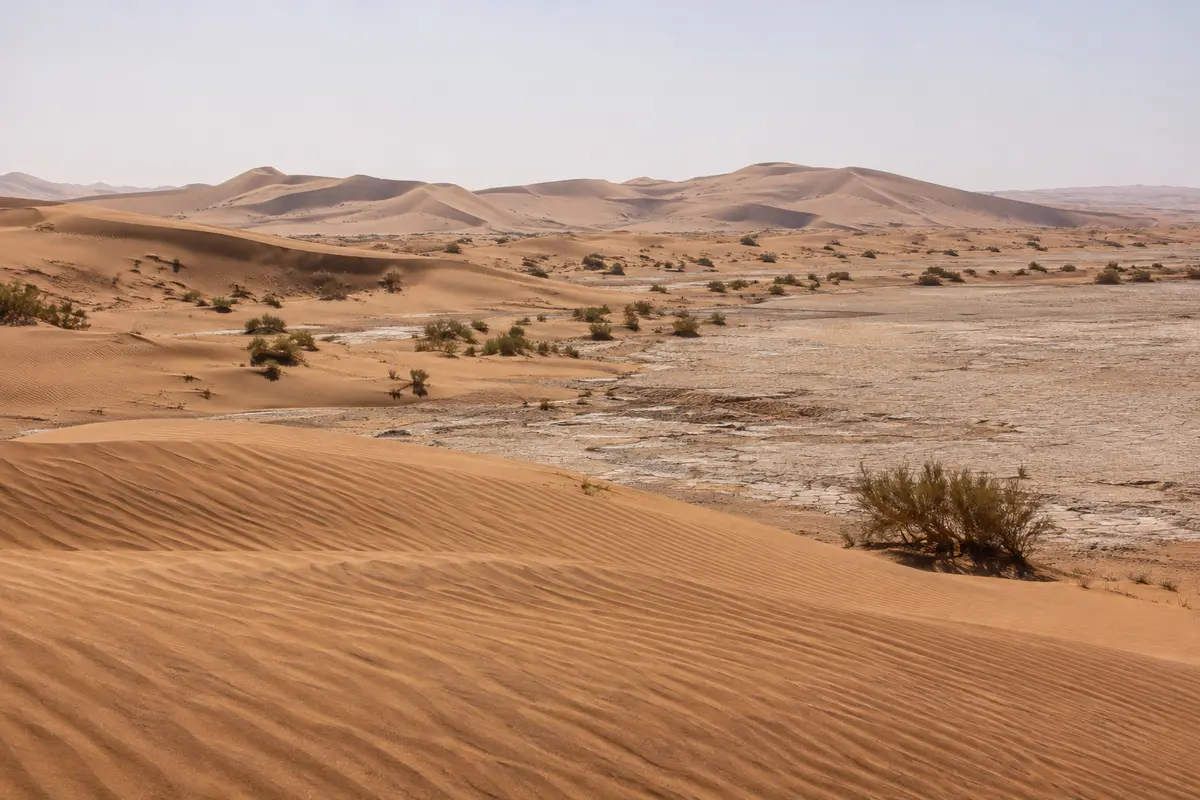
The eastern approach from M’Hamid, where the Drâa valley road ends, and a natural start for camel treks.
What camel trekking at Erg Chigaga is really like, from walking pace and riding sections to mobile bivouacs, drinking water, camel welfare and leave-no-trace.
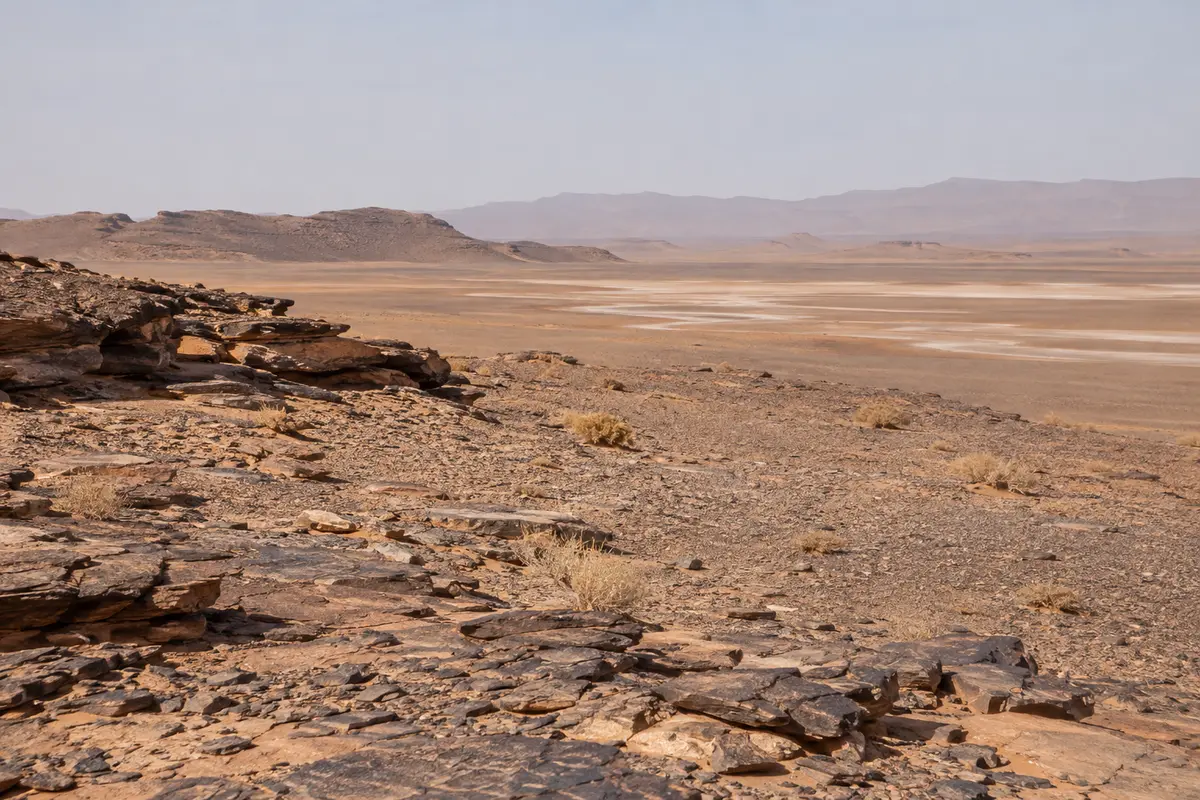
The western approach on tarmac to Foum Zguid, then off-road across Lac Iriki to the dunes.
South-west to Foum Zguid and Lac Iriki, or south-east down the Drâa to M’Hamid. How to choose your road from Ouarzazate.
The two gateway towns, the 4×4 and camel routes, and what self-driving really involves.
Send your dates and group size. We reply with a written itinerary and price — no payment needed to ask.