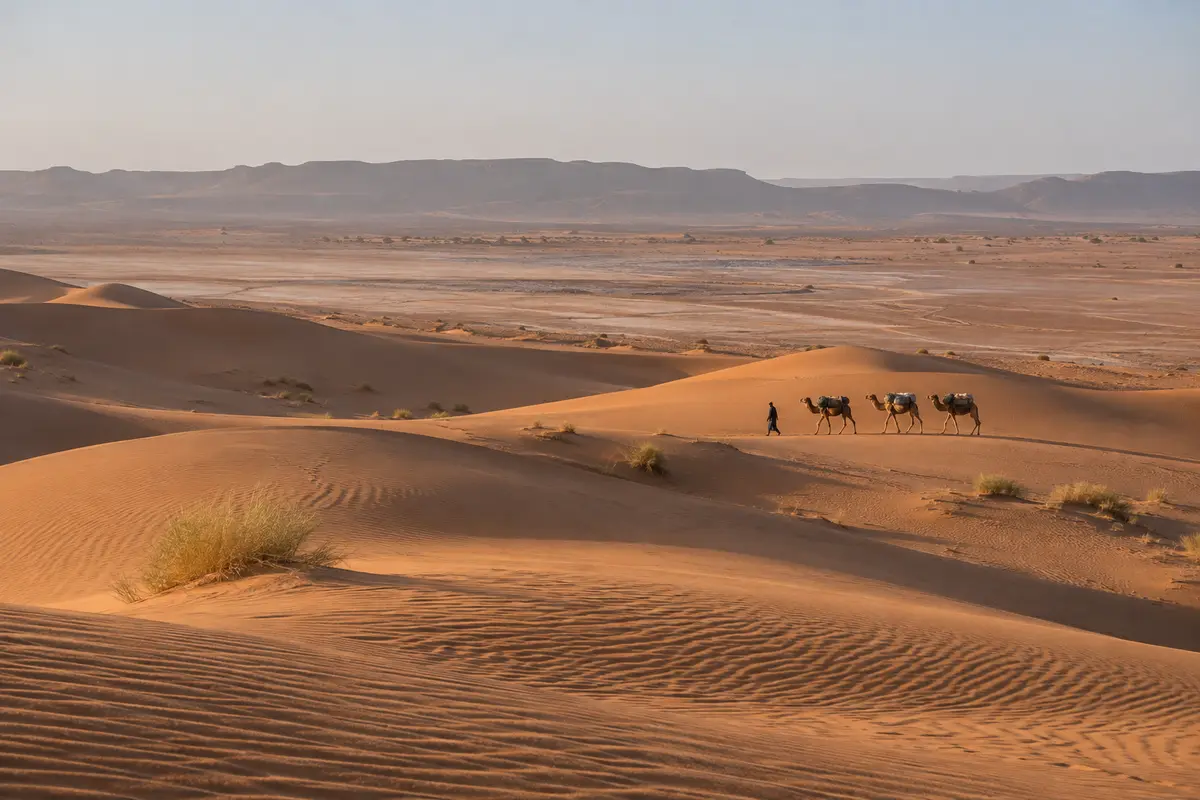
3-day camel trek
Walk towards the dunes for three days with a small camel caravan, sleeping two nights at simple mobile bivouacs.
Private trip Trek Price on request
On a camel trek the camels carry most of the load and you do most of the walking. This page explains what a day on the move looks like, where you sleep, how water works and how we expect the animals and the desert to be treated.
The rhythm of a trek follows the sun. You get up early, have breakfast while the team packs up camp and loads the camels, and set off while the air is still cool. Walking continues through the morning, then everyone stops in whatever shade can be found for a long lunch and a rest through the hottest part of the day. In the afternoon you walk again until the team chooses a place to camp, ideally with time to climb a dune for sunset.
A loaded camel walks at an easy human pace, and the caravan moves at the speed of the slowest walker. Distances are modest compared with a mountain trek, but soft sand makes every step more work than it looks. Our treks are planned around a few hours of walking each day, set out as illustrative stages in your itinerary. The real stages depend on the route, the season and how your group is feeling.
The camels carry the bags, water, food and camp equipment. Riding sections can usually be arranged for parts of the day, which many trekkers enjoy as a break or a different view, but the trek is built around walking. If you would prefer to ride most of the time, tell us before booking so we can advise honestly whether a trek or a 4×4 trip with a short ride at camp suits you better.
There is no fixed camp on a trek. Each evening the team sets up a simple bivouac for your group, usually a small number of tents and a sheltered place to eat. On clear, calm nights some people choose to sleep outside. Facilities are basic: no electricity, no fixed bathroom and only a little water for washing. In return, you sleep far from the larger camps, with very little light from anywhere else.
Nights can be cold in the cooler months, even when the days are warm. We confirm the tents and bedding provided, and tell you what to bring, in your itinerary.
Water is one of the main loads the caravan carries. Drinking water is supplied on the trek, and we confirm how in your quote. Please bring a refillable bottle so less plastic is used, and drink steadily through the day rather than waiting until you feel thirsty. Washing water is limited; wet wipes and hand sanitiser are useful, as long as used wipes are carried out.
The camels are working animals and the trek depends on them staying healthy. We expect, and ask our cameleers to ensure, that:
If you ever have a concern about how an animal is being treated, tell your guide or contact us directly.
The desert looks empty, but it is a fragile environment and a place where people live and work. On our treks we ask that:
A camel trek suits people who enjoy walking, are comfortable with simple camps and want a slow, quiet way to reach the dunes. Our trekking overview compares it with dune walks and short rides, and the 3-day and 4-day treks show how the days are arranged. For packing, see the travel guide.
Walk towards the dunes for three days with a small camel caravan, sleeping two nights at simple mobile bivouacs.
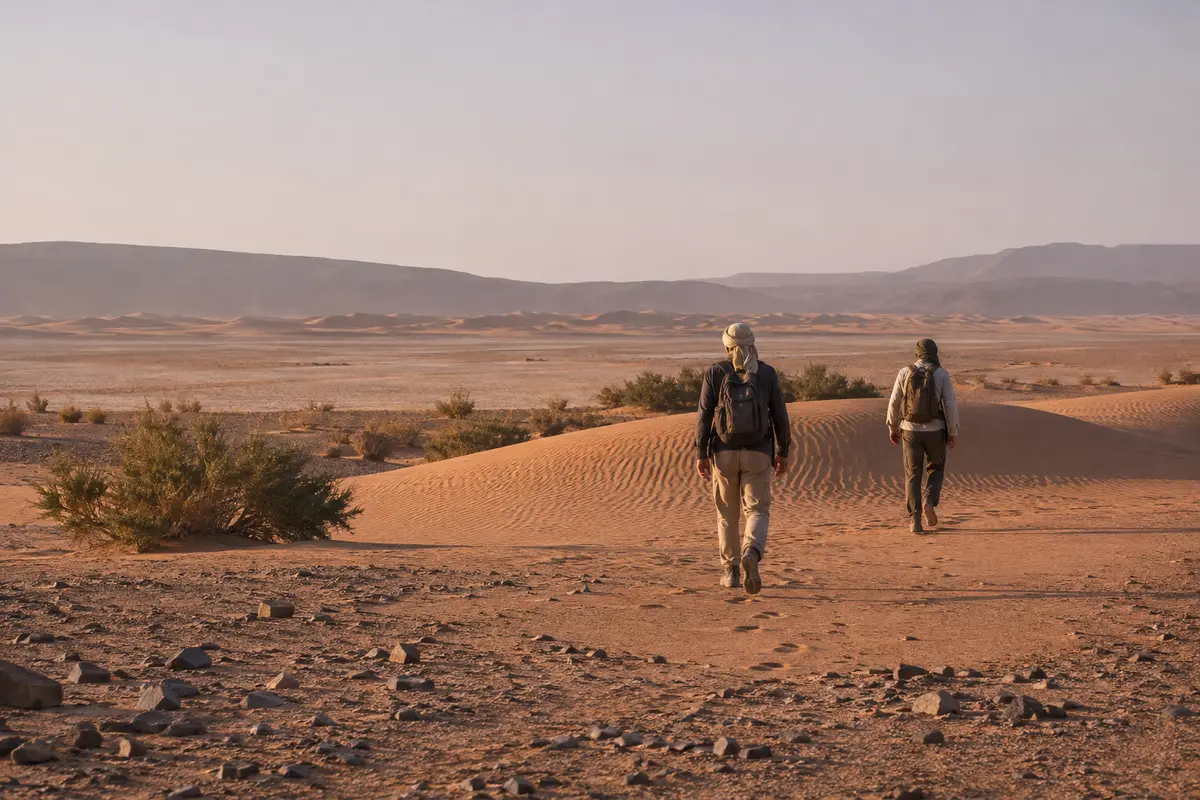
Four days on foot with a camel caravan and three nights at mobile bivouacs, for walkers who want a deeper desert route.
Five days on foot with a camel caravan and four nights at mobile bivouacs, crossing open desert before the dunes.
A week on foot through remote desert with a camel caravan and six nights at mobile bivouacs, for experienced walkers.
Desert walking at Erg Chigaga explained, from dune walks and short camel rides to camel-supported treks of 3 or 4 days, with longer routes on request.
Walk towards the dunes for three days with a small camel caravan, sleeping two nights at simple mobile bivouacs.
Four days on foot with a camel caravan and three nights at mobile bivouacs, for walkers who want a deeper desert route.
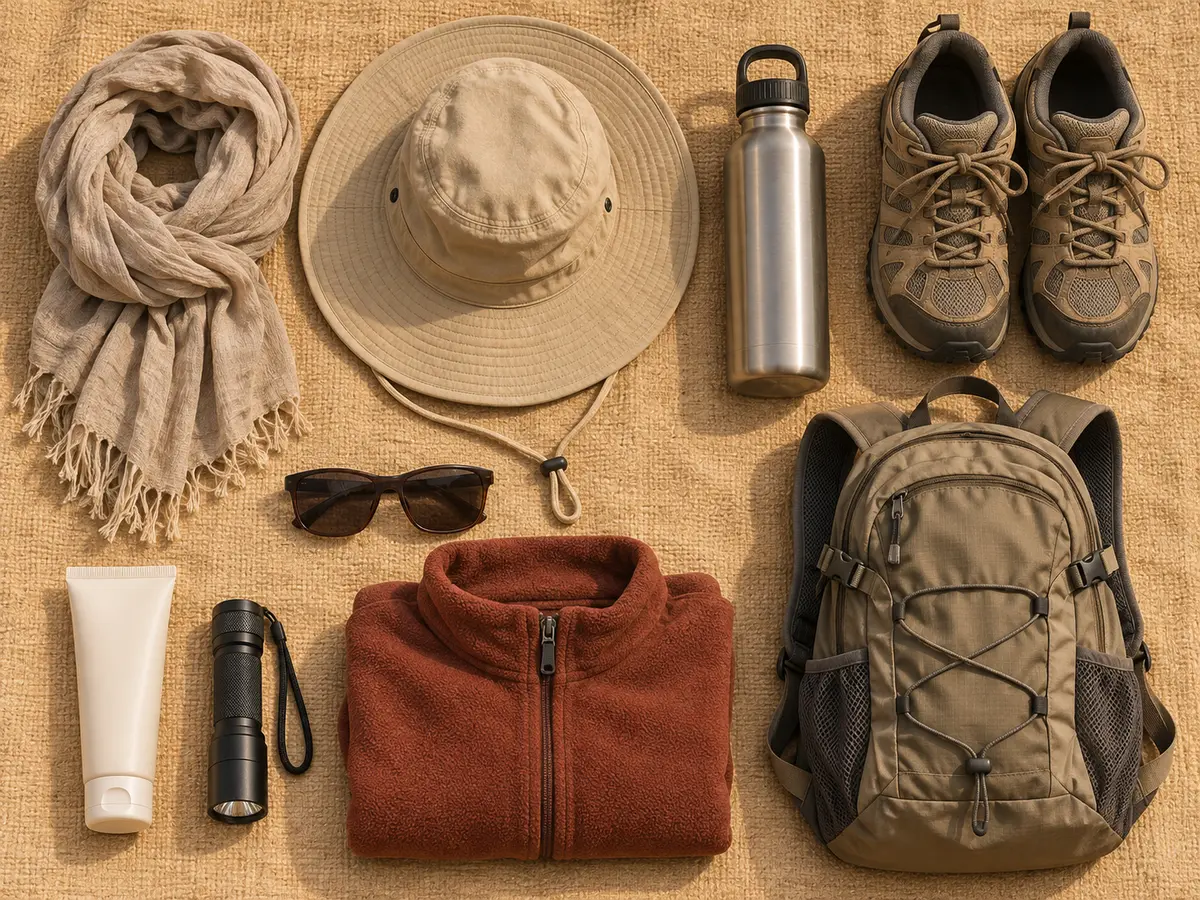
Where the dunes are, how long to stay, and the practical details worth sorting before you go.
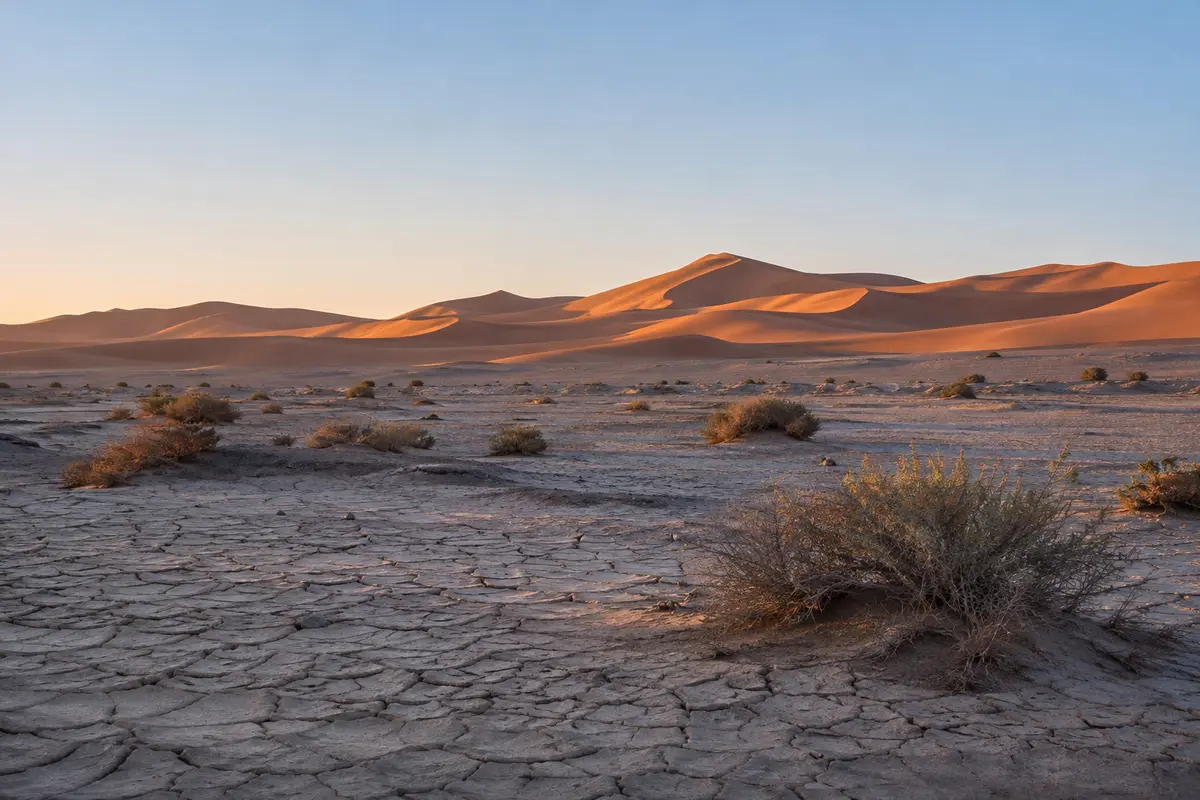
Autumn, winter, spring and summer in the dunes, and what each season means for your trip and your bag.
Send your dates and group size. We reply with a written itinerary and price — no payment needed to ask.