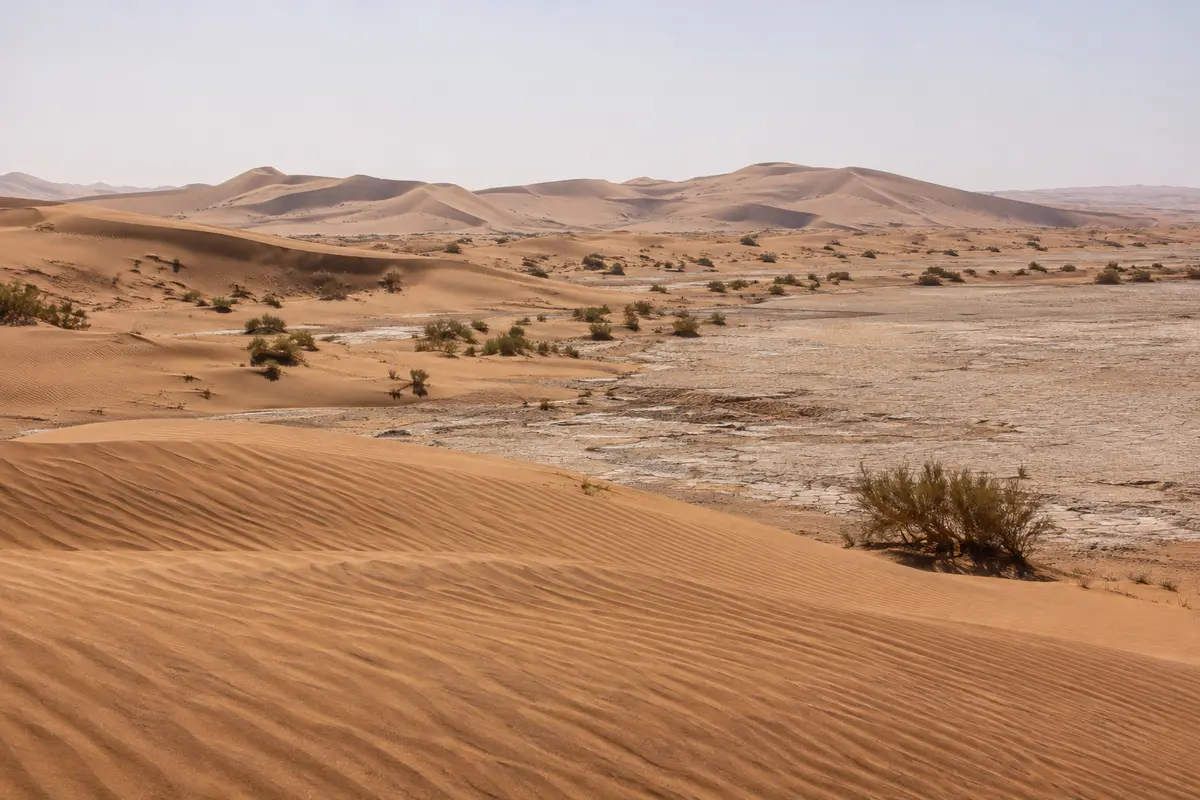
Erg Chigaga from M’Hamid
The eastern approach from M’Hamid, where the Drâa valley road ends, and a natural start for camel treks.
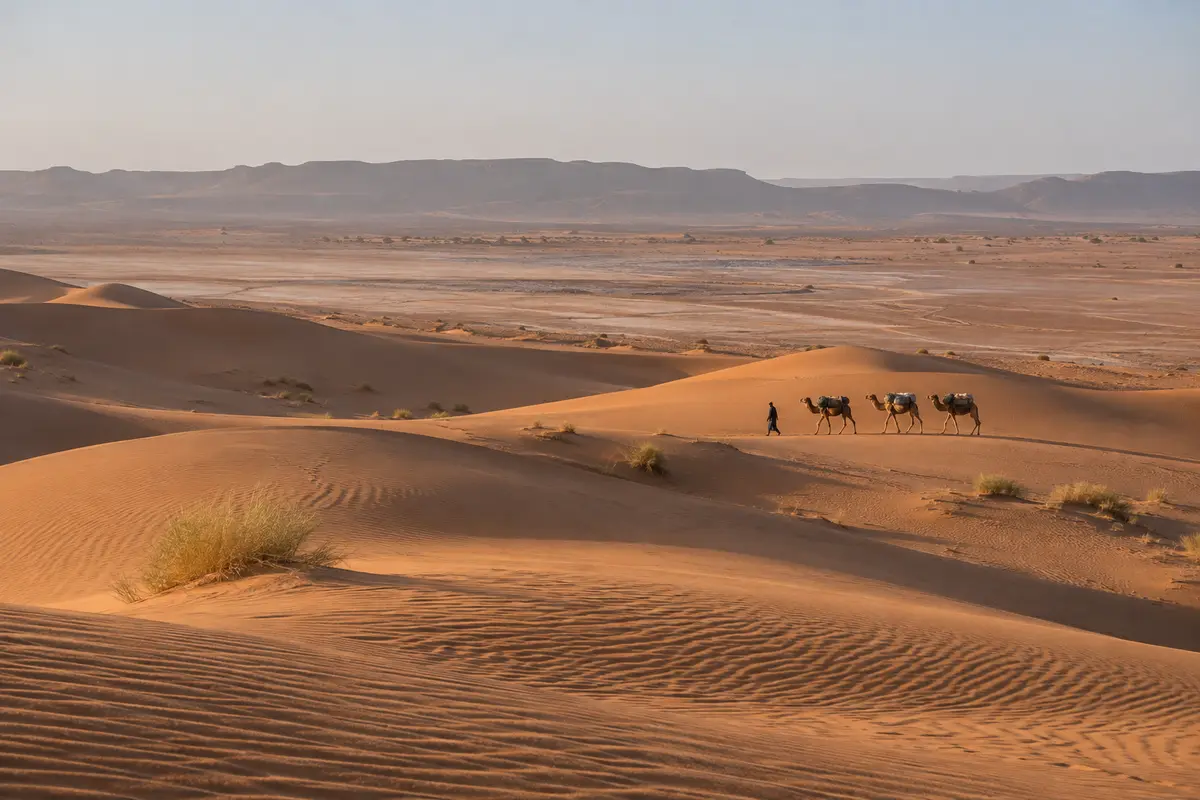
Five days on foot gives the desert time to change around you. Walk with a small camel caravan from stony plains and dry riverbeds into the sand of Erg Chigaga, sleeping four nights at simple camps far from the vehicle tracks.
Five days lets the route cross more of the open desert before it reaches the dunes, so the trek has a clear sense of progress from stony ground to sand. Starting on the Foum Zguid or M’Hamid side keeps the transfer short and puts the walking first. The exact route depends on the season and your group, and is set out in your itinerary.
The 5-day trek is for walkers who want the journey, not only the destination. After a shorter first day, there are two full days of open desert before the sand deepens and the route reaches the dunes of Erg Chigaga. That gradual change, from stony plain to sand sea, is what makes a longer trek worth the effort.
The start is agreed when you book. Most treks begin on either the M’Hamid side or the Foum Zguid side, with a 4×4 transfer from town to the trailhead where the camel team meets you. The M’Hamid side is widely used for camel treks and suits travellers coming through the Drâa valley; the Foum Zguid side suits those arriving along the N12 from Ouarzazate or Taznakht. Tell us your wider route and we will suggest the start that fits.
Expect variety. The early stages usually cross gravel, stony ground and dry riverbeds with sparse vegetation. Closer to Erg Chigaga the ground becomes sandier and the dunes grow larger. Firm ground is easy going; soft sand and dune slopes are slower and more tiring. The guide sets a pace that suits the group, with a long rest at midday.
The walking times on this page, around four to six hours on full days, are illustrative. The real stages are set out in your itinerary.
You are typically accompanied by a guide, a cameleer who manages the camels and their loads, and a cook. The team for your group is confirmed in your quote. They choose and set up each camp, cook the meals and pack everything away each morning.
The caravan carries water for the trek, and drinking water is supplied as confirmed in your quote. Bring a refillable bottle and drink steadily, including in the cooler months. Part of the appeal of a trek is being far from the vehicle tracks, so we explain the support and back-up arrangements in your itinerary, and your guide can shorten a stage or slow the pace whenever needed.
Trekking is most comfortable in the cooler months. Days can still be warm in the sun while nights are cold, and spring can bring strong winds. Summer heat makes long walking days hard and is generally best avoided. See the weather guide.
Our camel trekking guide covers sleeping arrangements, water and how the camels are looked after, and the desert camps guide explains the fixed camps if you want a night of more comfort before or after. If five days feels like a lot, the 4-day trek is a shorter alternative; if you want something longer and more remote, see the 7-day trek.
Times are illustrative and depend on season, sand conditions and your pace. Your final plan is confirmed in writing with your quote.
Day 1
Meet in the agreed starting town and transfer by 4×4 to the trailhead to meet the camel team. After loading the camels you walk a first, shorter stage across stony plain to your first mobile bivouac.
Day 2
A full walking day over firm gravel, sandy stretches and dry riverbeds. The caravan sets off early, stops for a long lunch in the shade and continues in the afternoon to the next camp.
Day 3
A second full day across open country, often the day the group finds its rhythm. Small dunes and sandier ground start to appear, and the views open out ahead.
Day 4
The sand deepens as you approach Erg Chigaga and the big dunes come into view. Walking is slower here, so the stage is planned accordingly. Camp is set near the dunes, with time to climb a ridge for sunset.
Day 5
Sunrise over Erg Chigaga, a final short walk and goodbyes to the camel team. A 4×4 then takes you back to your starting town, or on to your next destination if arranged.
A 4×4 with driver handles the transfers to the trailhead and back. During the trek, camels carry the luggage, water and camp equipment. We explain the support arrangements in your itinerary.
You sleep four nights at a simple mobile bivouac set up by the team each evening, typically in small tents. There is no electricity or fixed bathroom, and washing water is limited. We confirm the tents and bedding in writing before you book.
Moderate. You should be comfortable walking for several hours a day on sand, gravel and uneven ground, five days in a row. No technical skills are needed, but the effort is cumulative and soft sand is tiring. Tell us about knee or back problems, heart conditions or pregnancy so we can advise honestly.
Every trip is quoted individually for your dates, group size and comfort level. Deposit and cancellation terms are stated in writing in your quote before you pay anything.
The eastern approach from M’Hamid, where the Drâa valley road ends, and a natural start for camel treks.
What camel trekking at Erg Chigaga is really like, from walking pace and riding sections to mobile bivouacs, drinking water, camel welfare and leave-no-trace.
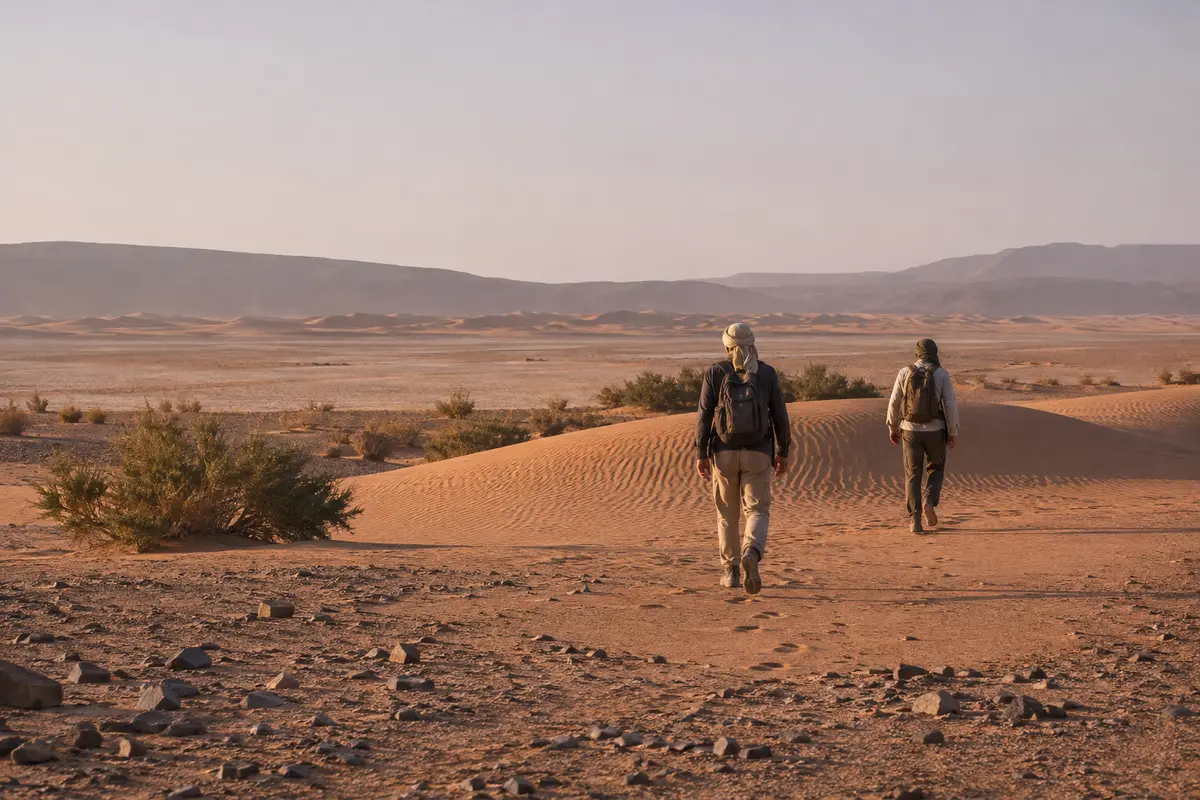
Four days on foot with a camel caravan and three nights at mobile bivouacs, for walkers who want a deeper desert route.
A week on foot through remote desert with a camel caravan and six nights at mobile bivouacs, for experienced walkers.
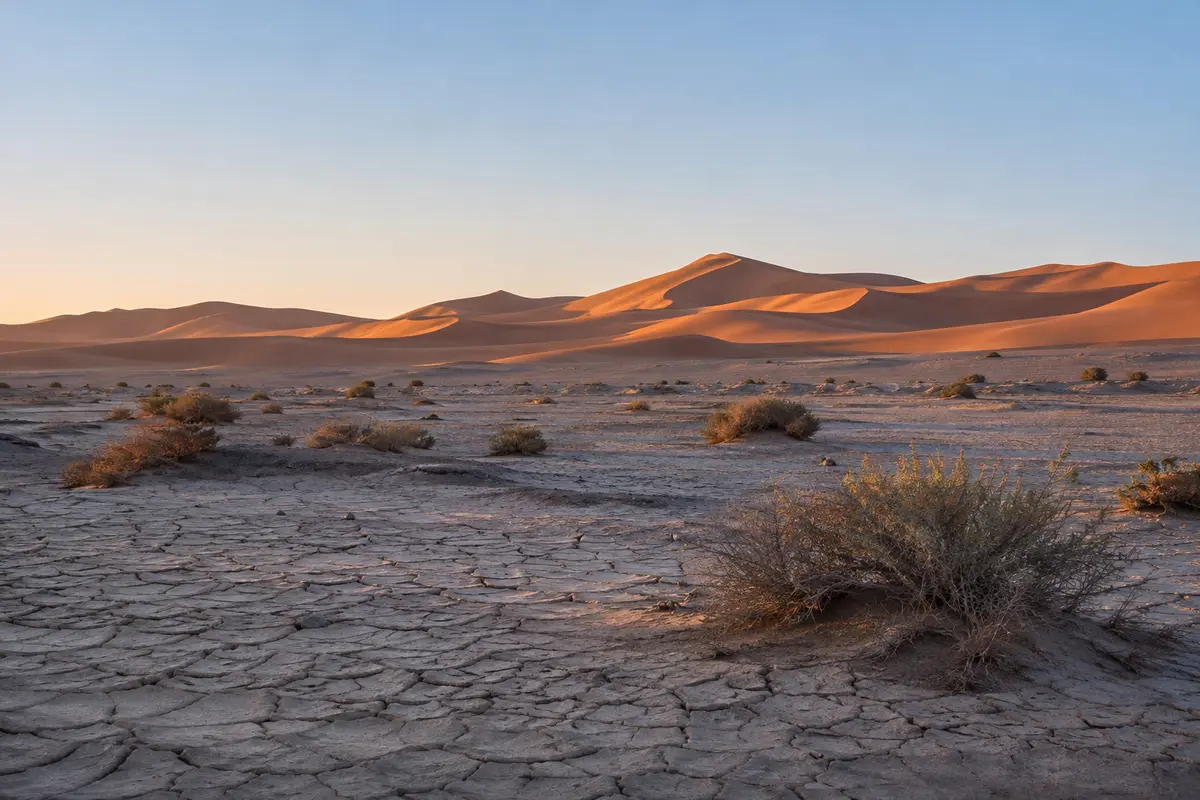
Autumn, winter, spring and summer in the dunes, and what each season means for your trip and your bag.
Send your dates and group size. We reply with a written itinerary and price — no payment needed to ask.