Lac Iriki day trip
A day by 4×4 into the Iriki basin from Foum Zguid, with time on the dry lake bed. No dunes and no overnight.
Lac Iriki is a vast, usually dry lake bed inside Iriki National Park, between the town of Foum Zguid and the dunes of Erg Chigaga. On the western route you cross it by 4×4, and for many travellers it is the most surprising part of the journey.
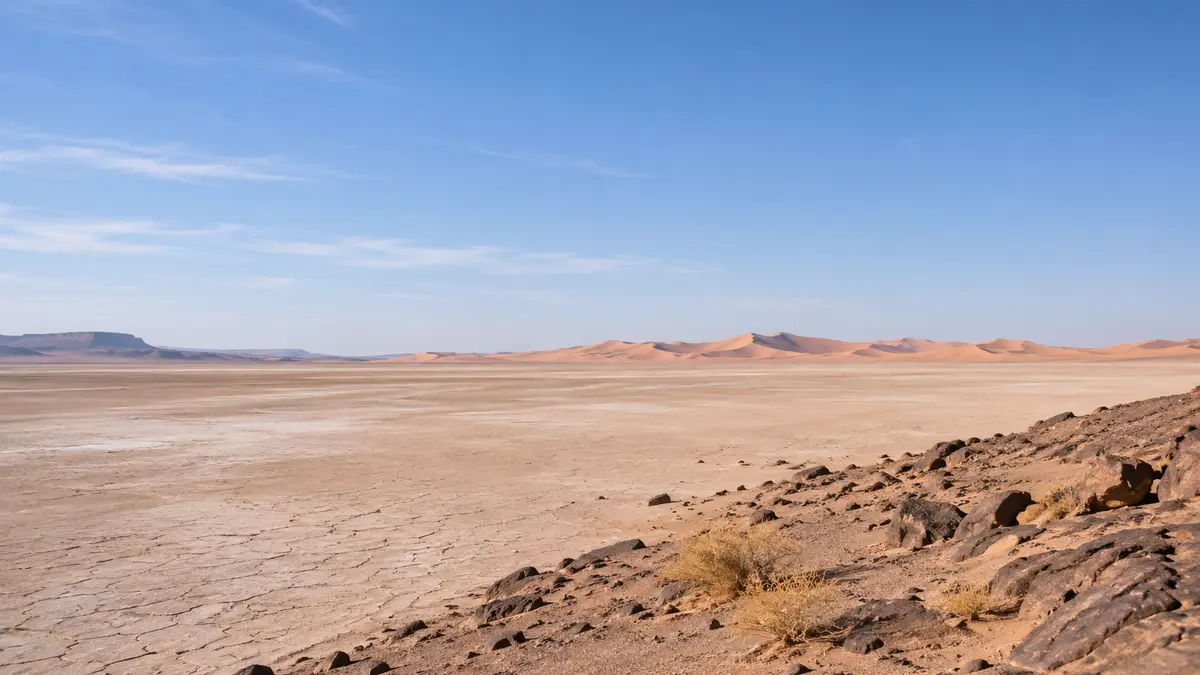
Lac Iriki is a dry lake bed in the south of Morocco, inside Iriki National Park. It lies between Foum Zguid and Erg Chigaga, in a wide basin where water from rare rains once gathered and spread. Today, for most of the year, it is a vast flat expanse of hard, pale ground with almost nothing standing on it.
It is not a lake in the sense most visitors imagine. You will not find a shoreline, boats or a viewpoint over water. What you find instead is space: a surface so flat and open that the horizon seems to curve away from you, with the first dunes of Erg Chigaga showing as a low line in the distance.
Crossing Lac Iriki feels quite different from the rest of the route. The ground changes from stony desert to a smooth, compacted surface, and the vehicle suddenly runs quieter and straighter.
Things travellers often notice:
Occasionally. After exceptional rainfall in the wider region, parts of the lake bed have been known to hold water, sometimes for weeks. These events are rare and hard to predict, and they can change the route: a wet or muddy surface may mean taking a longer track around the edge.
We do not promise water, and we do not plan trips around it. If conditions on the lake are unusual before your departure, we tell you and adjust the itinerary.
Lac Iriki follows the same broad seasonal pattern as the rest of the region:
The light is softest in the morning and late afternoon. At midday the surface turns flat and bright, which suits wide, minimalist photographs. Our weather guide explains the seasons in more detail.
There are no fixed viewpoints on the lake, so stops depend on the light, the conditions and what you would like to capture. Typical ideas:
Tell your driver what you are hoping for. Stops are flexible, though in summer we keep them brief.
Lac Iriki is one of the main reasons to choose the western approach. Leaving Foum Zguid, the route runs off-road across stony desert into the Iriki basin, crosses the lake bed and continues towards the dunes. On a typical trip you pass it on the way in and again on the way back, often at different times of day.
The crossing features on several of our trips:
For the practical side of starting in Foum Zguid, see tours from Foum Zguid.
Lac Iriki lies within a protected area. Stay close to the vehicle and your driver, keep to the tracks they choose, and take every piece of rubbish away with you. Plants around the edges of the lake bed grow slowly in this climate, so avoid walking or driving over them.
A day by 4×4 into the Iriki basin from Foum Zguid, with time on the dry lake bed. No dunes and no overnight.
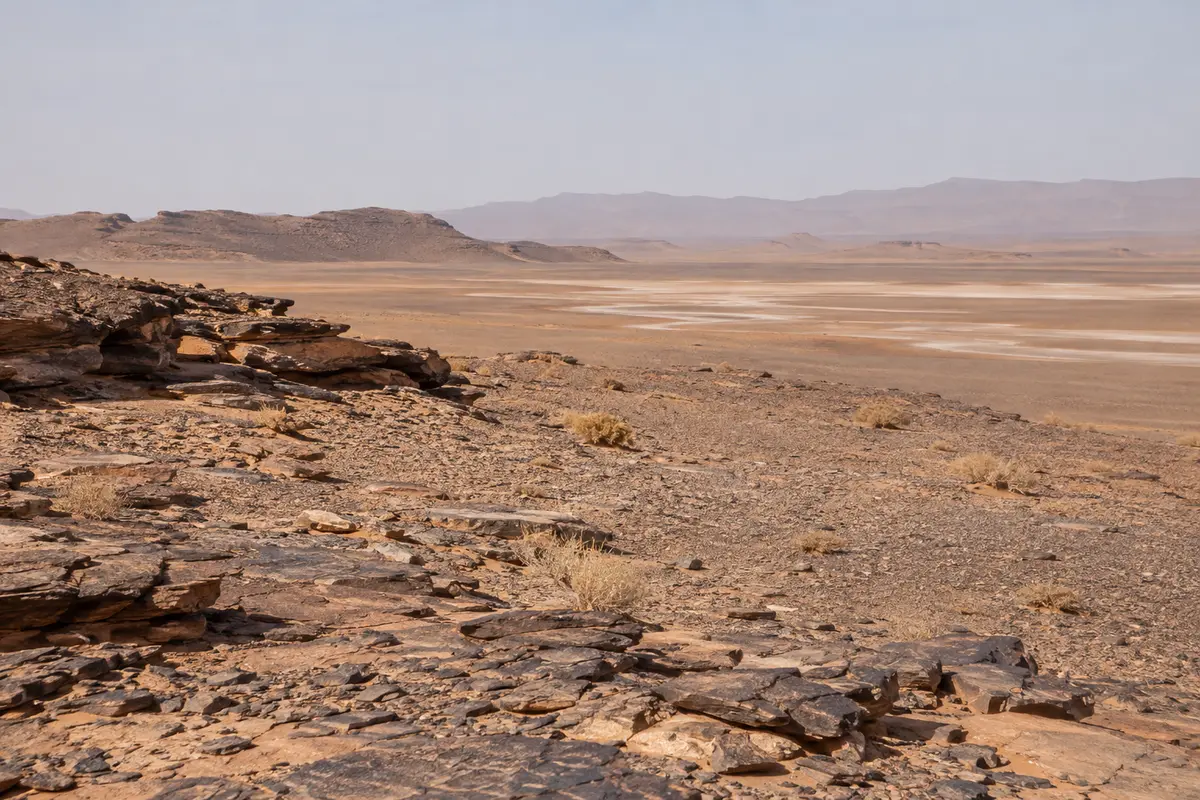
The western approach on tarmac to Foum Zguid, then off-road across Lac Iriki to the dunes.
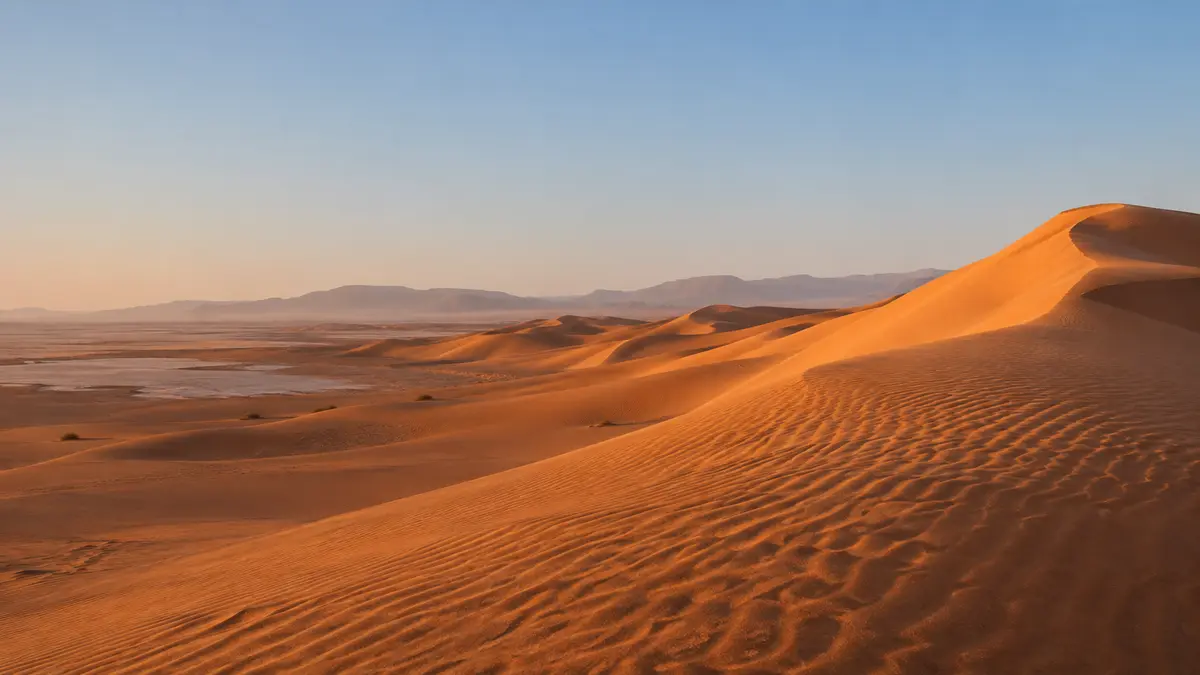
The remote dune field near the Algerian border, reached only off-road from Foum Zguid or M’Hamid.
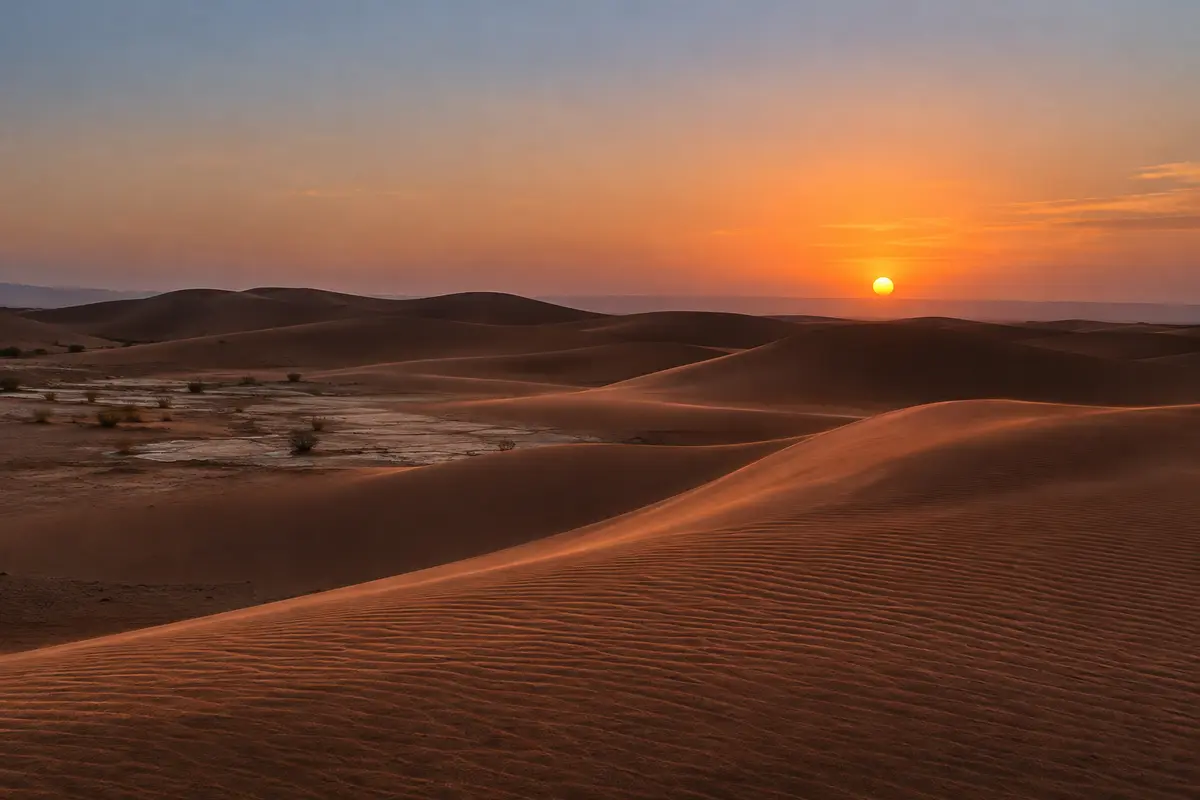
One night at a desert camp, with Lac Iriki on the way in and sunset on the dunes.
Send your dates and group size. We reply with a written itinerary and price — no payment needed to ask.