Illustration
Camel trekking
What camel trekking at Erg Chigaga is really like, from walking pace and riding sections to mobile bivouacs, drinking water, camel welfare and leave-no-trace.
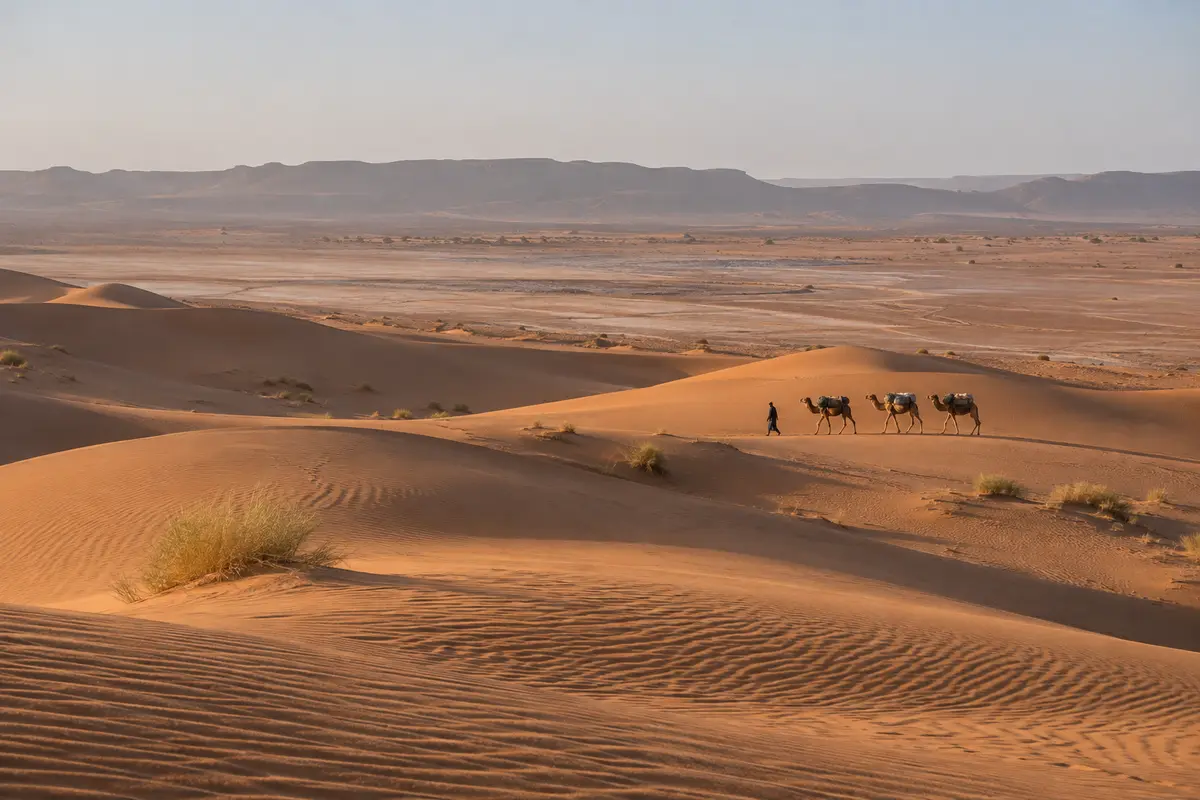
For many travellers a camel ride is part of the picture of the Sahara. At Erg Chigaga there are two quite different ways to do it, a short ride near camp or a trek of several days with a caravan. This page explains the difference, who each suits and what we expect for the animals.
On a 4×4 trip, a short camel ride is usually something you do from camp, often in the late afternoon so you reach a ridge for sunset, or in the early morning. A cameleer usually leads the camel on foot, and you ride over the nearby dunes before returning to camp.
It is a gentle introduction rather than a journey. You get the rocking rhythm, the height and the quiet, without committing a whole day. It can usually be arranged on the 2-day and 3-day trips. Whether it is included, and how long it lasts, is confirmed in your quote.
On a trek, the camels carry the luggage, water and camp equipment, and you mostly walk alongside them. Riding sections are often possible for part of the day, but the trek is built around walking at the pace of the caravan. You sleep at a simple mobile bivouac rather than a fixed camp.
If the idea of travelling with camels appeals more than a single ride, read camel trekking at Erg Chigaga and see the 3-day trek.
A short ride may suit you if:
A trek may suit you better if:
Neither may be right if you have back problems, recent injuries or find getting up and down from a low position difficult. Tell us, and we suggest other ways to enjoy the dunes.
A camel kneels for you to mount. When it stands, it rises back legs first, tipping you forward, and then straightens its front legs. Lean back, hold the saddle handle and follow the cameleer’s instructions. Dismounting reverses the movement. This is the moment most people find unsettling, and it passes quickly.
The camels are working animals, and a good ride depends on them being healthy and calm. We expect that:
If you see anything that worries you, tell your guide or contact us directly. We take it seriously.
For more ideas, see our desert activities overview.
What camel trekking at Erg Chigaga is really like, from walking pace and riding sections to mobile bivouacs, drinking water, camel welfare and leave-no-trace.
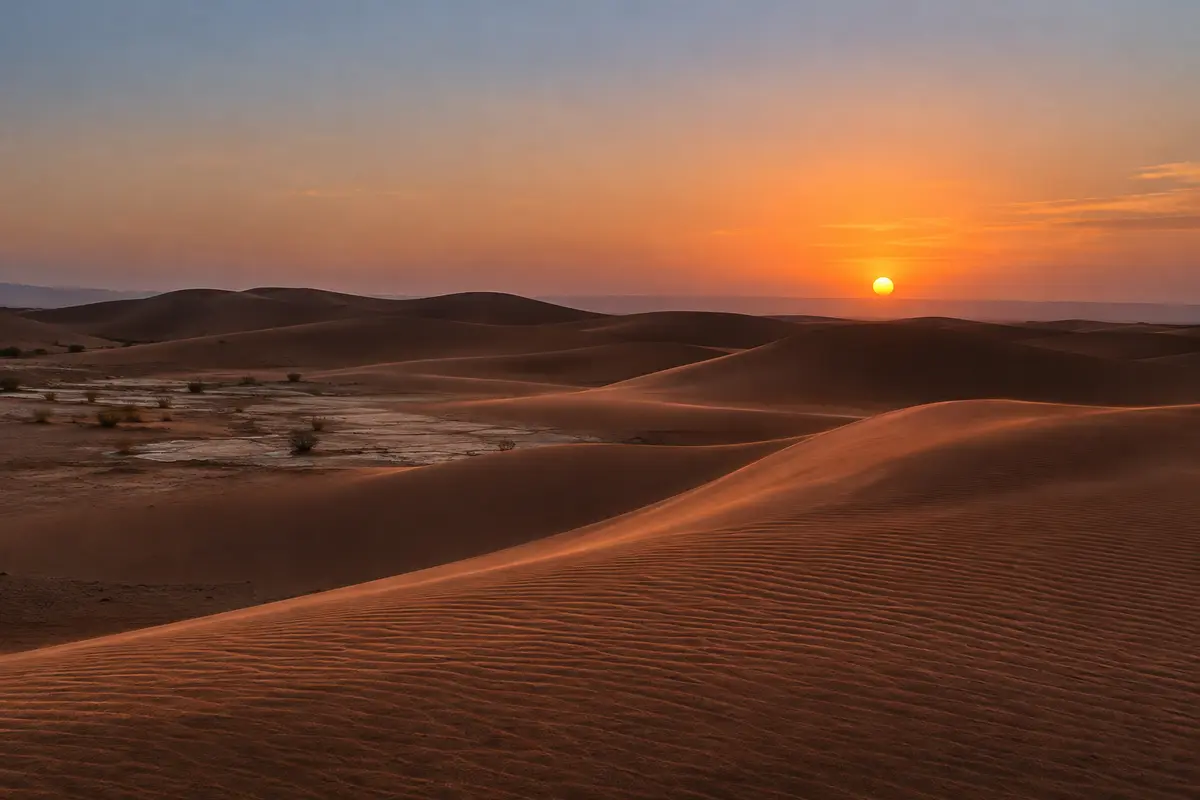
One night at a desert camp, with Lac Iriki on the way in and sunset on the dunes.
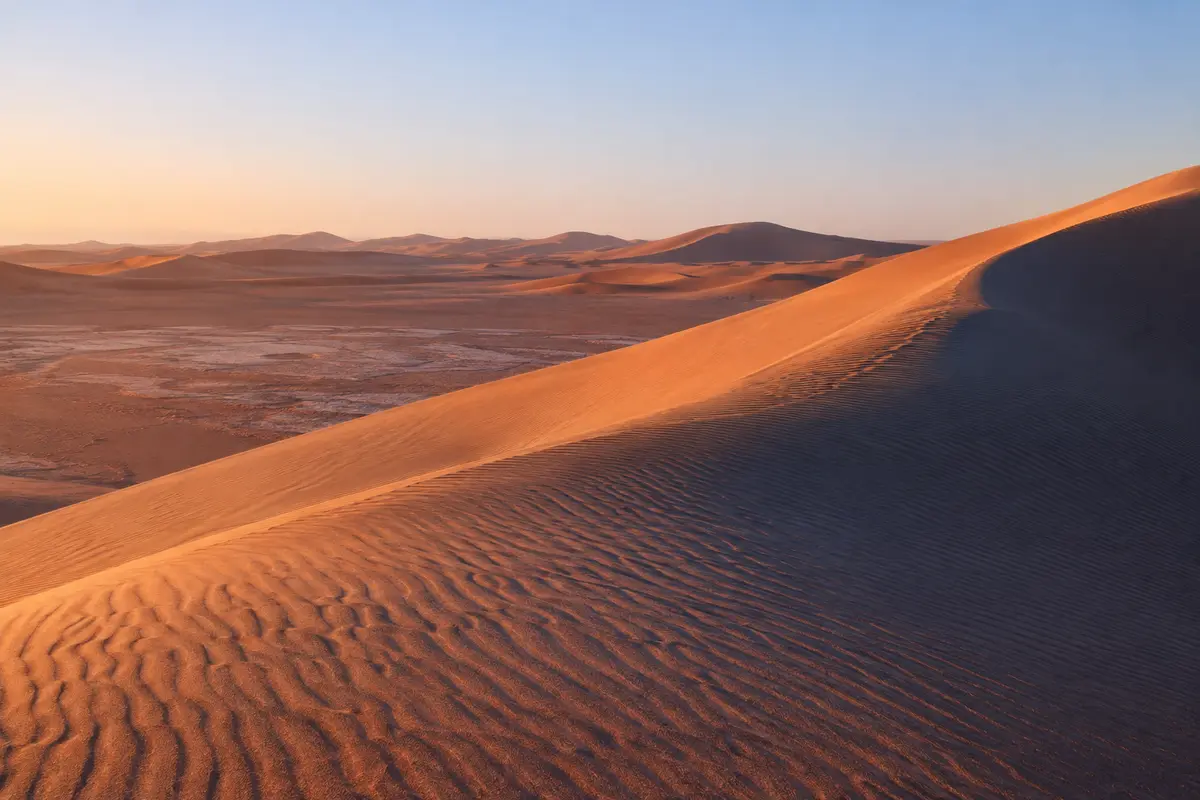
Two nights at a desert camp with a whole day in the dunes for walks, sunrise and slow time in the sand.
Camel rides, dune walks, sandboarding, stargazing and photography, and how we confirm each one before you book.
Walk towards the dunes for three days with a small camel caravan, sleeping two nights at simple mobile bivouacs.
Send your dates and group size. We reply with a written itinerary and price — no payment needed to ask.